Experimental Zone 30
Las Mil Calles Neighborhood. Tactical urbanism for traffic calming and pedestrian safety in Providencia.
Place
Providencia, Chile
Year
2015
Objectives
To reduce automobile speeds in residential environments to increase the safety and protection of residents.
To test the technical and social feasibility of implementing a permanent reduced-speed zone (30 km/h).
To inform a long-term change in neighborhood mobility, prioritizing the human scale over vehicular traffic.
To collect qualitative and quantitative indicators over a 15-day period to evaluate the real impact on road behavior.
Methodology
The project was executed as a rapid, participatory, and sustainable prototyping action:
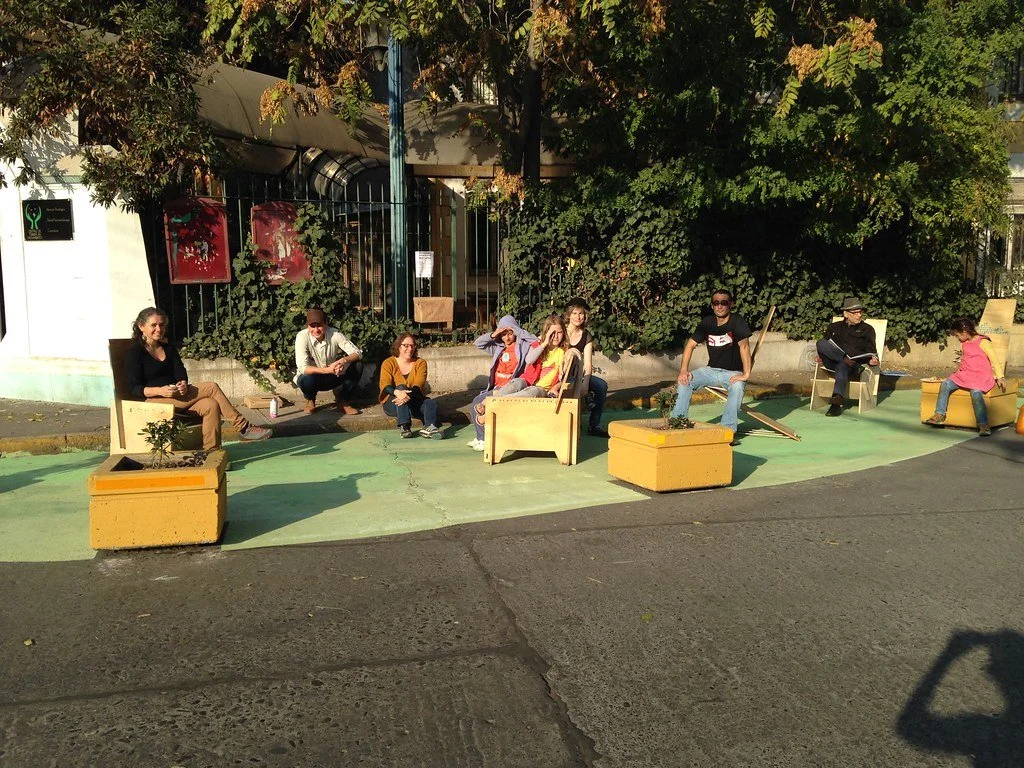
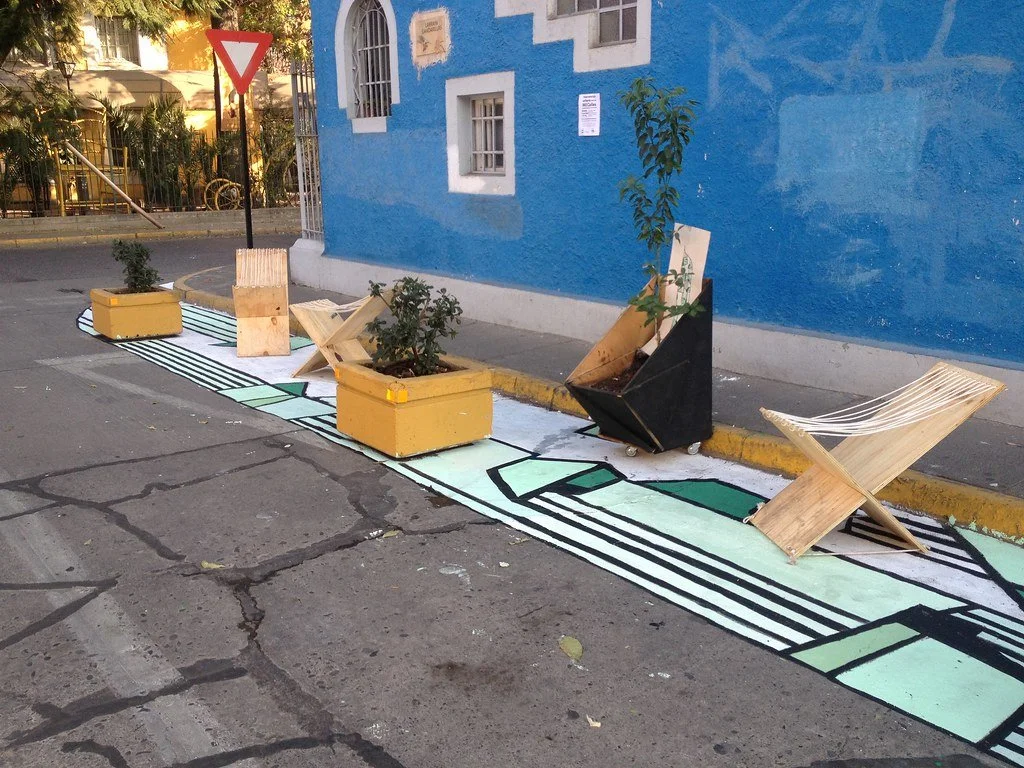
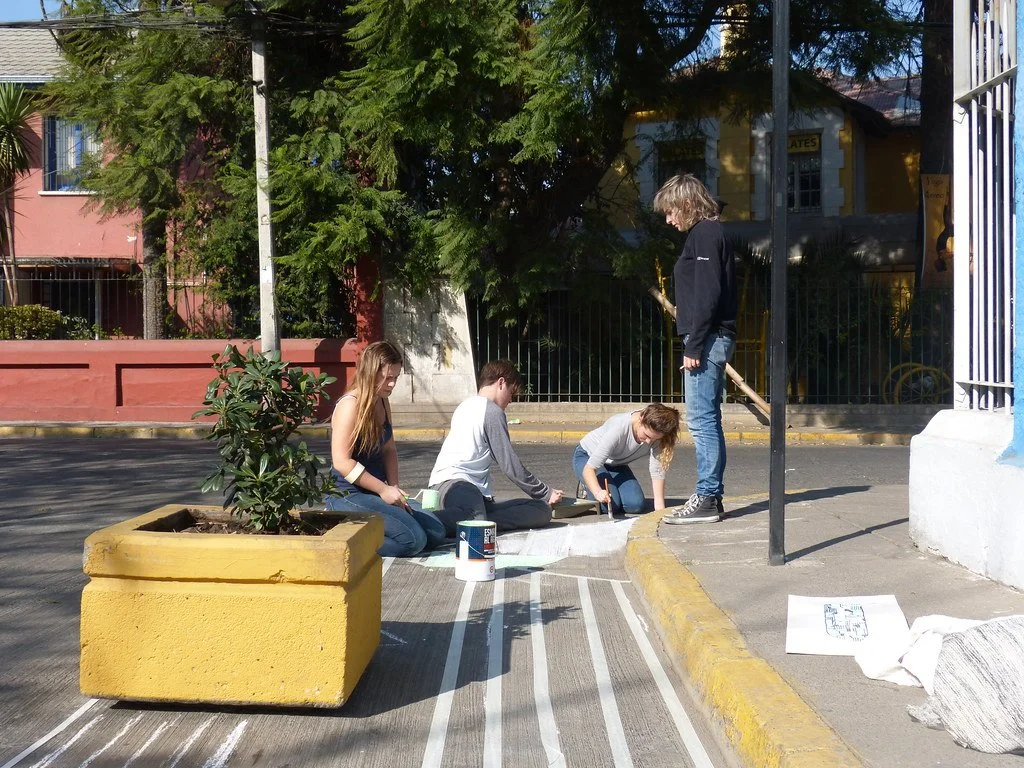
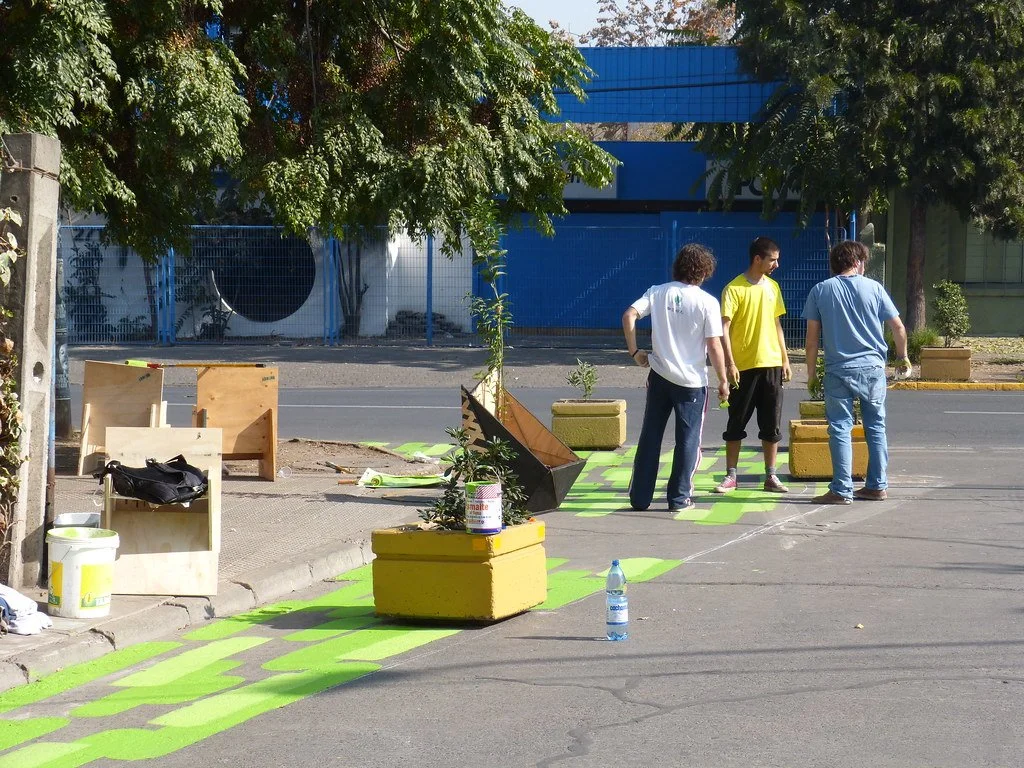
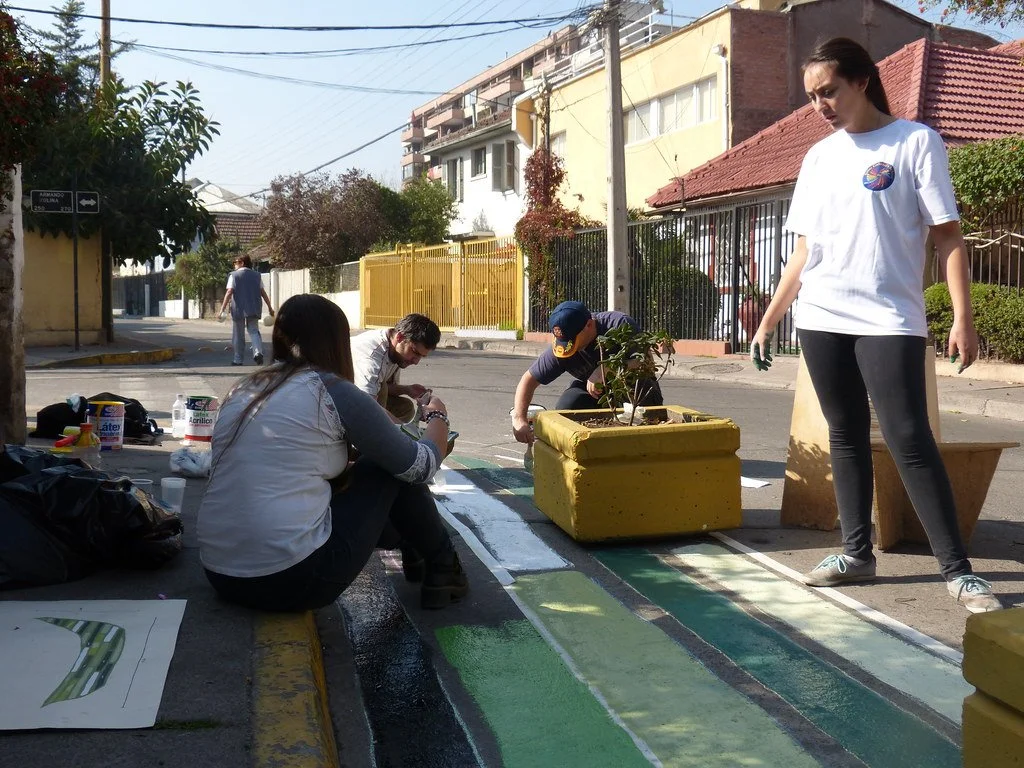
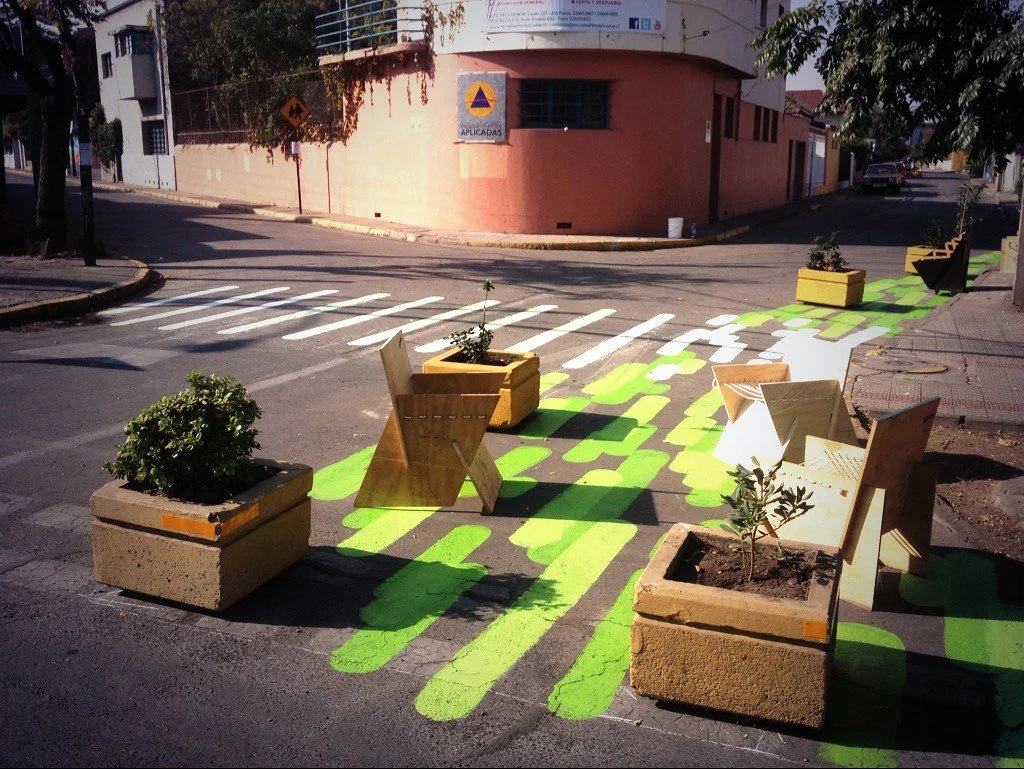
Roadscape Intervention: Construction of 6 tactical mini-plazas by painting pavements to visually narrow the roadway and force speed reduction.
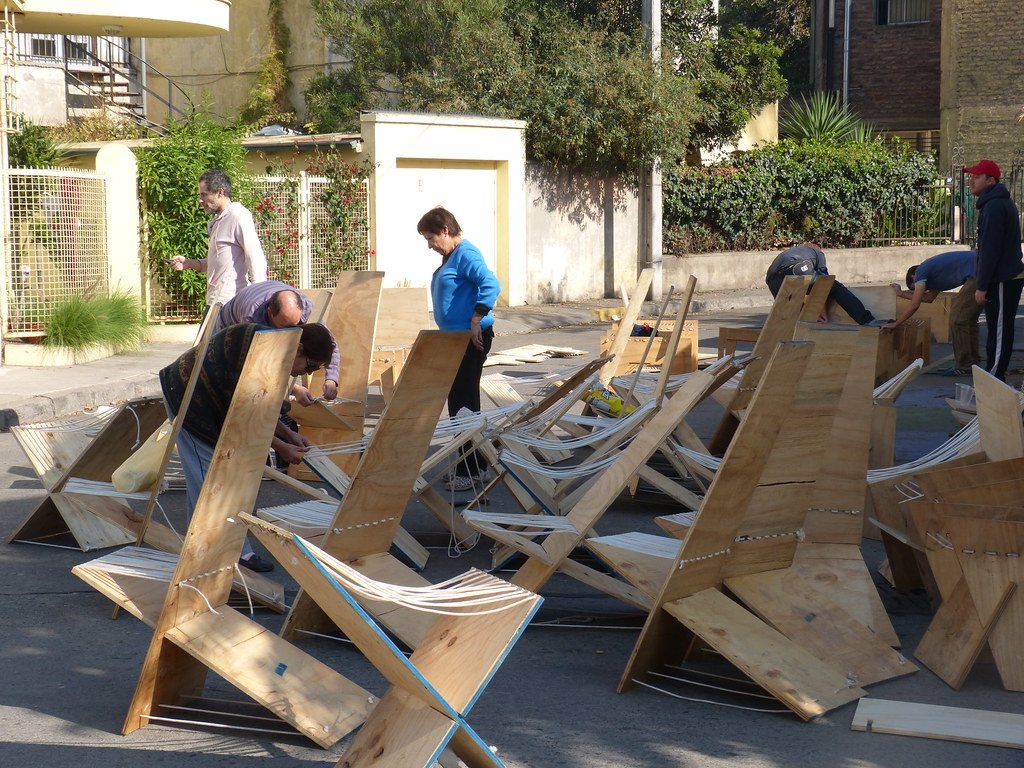
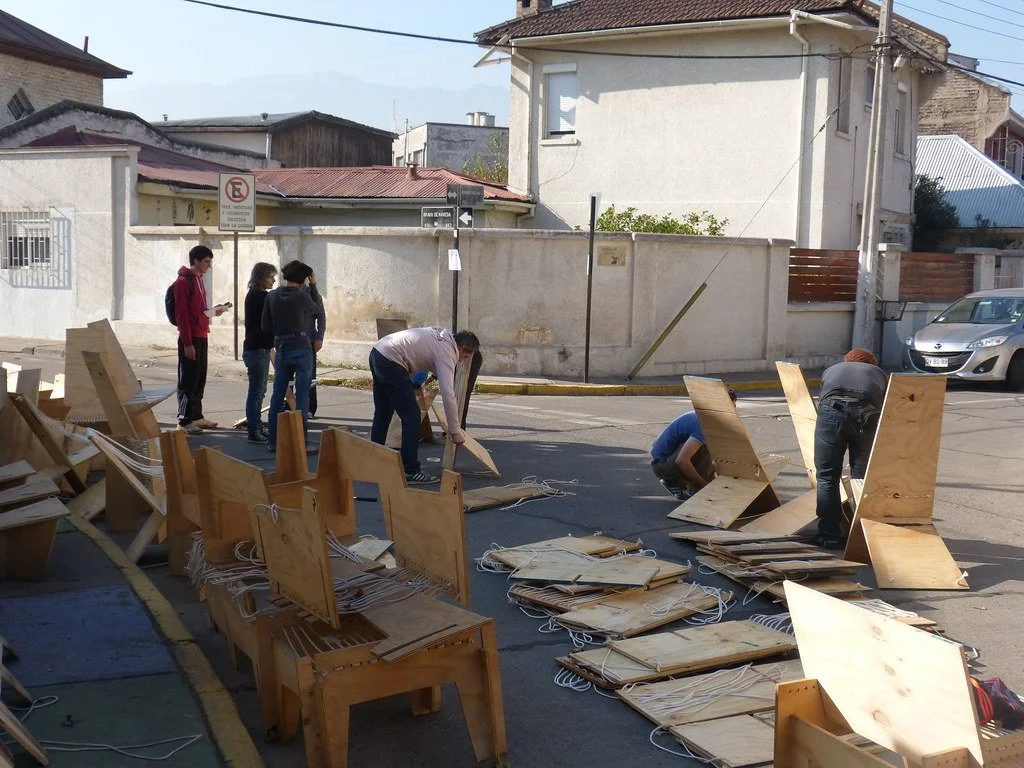
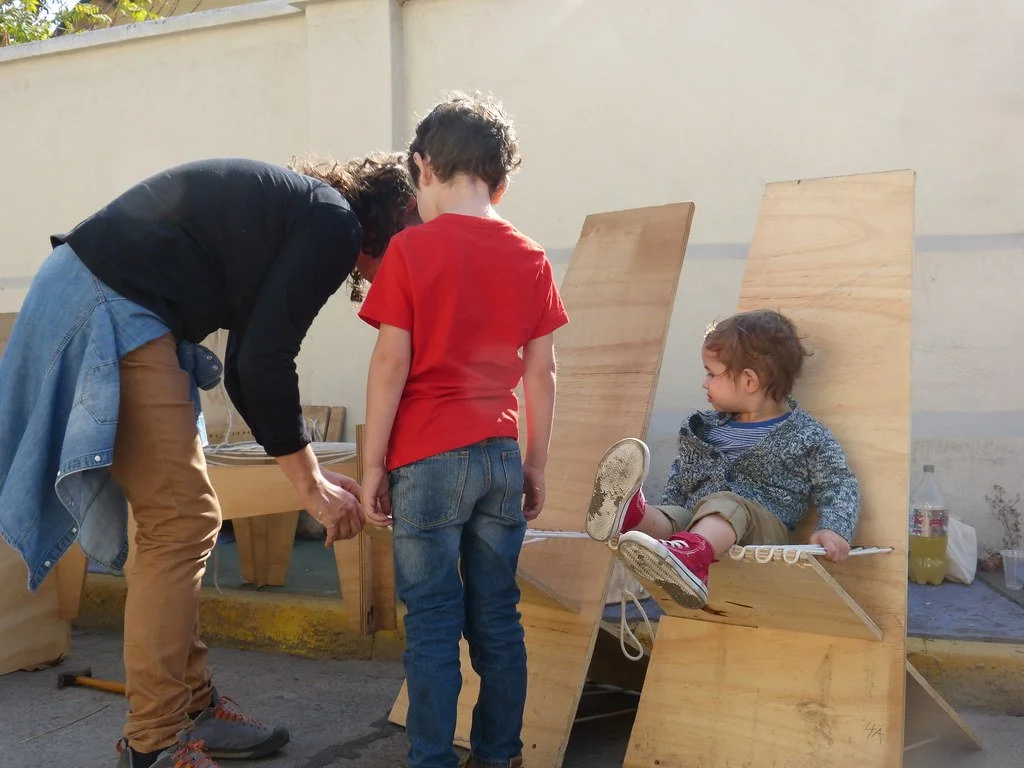
Urban Furniture and Circular Economy: Installation of planters and urban furniture previously used in the UDD Workshop at the 2014 fiiS Festival, promoting the reuse of city assets.
Academic and Neighborhood Co-construction: Collaborative implementation alongside architecture students from the Universidad del Desarrollo (UDD), neighborhood residents, and teams from the Municipality of Providencia.
Data-Based Evaluation: Intensive monitoring over 15 days using impact measurement tools to decide on the feasibility of a permanent installation.
Clients / Partners
Institutional: Municipality of Providencia.
Academic: Universidad del Desarrollo (UDD).
Collaborators: International Social Innovation Festival (fiiS) and the Las Mil Calles neighborhood community.
Execution: Ciudad Emergente.
Results & Impact
Immediate Road Safety: The intervention succeeded in reducing vehicle speeds, transforming a thoroughfare into a street of safe coexistence.
Community Legacy: At the end of the experiment, the furniture was donated to the residents, allowing the community to maintain the space's activation autonomously.
Evidence for Public Policy: The collection of indicators provided solid technical arguments for the municipality to evaluate the final traffic calming design.
Education and Professional Practice: The project allowed architecture students to apply tactical urbanism solutions in a real and highly socially relevant context.
Conclusions
Experimental Zone 30 demonstrates that urban design is the most effective tool for regulating speed and saving lives. By transforming the pavement into mini-plazas, Ciudad Emergente not only reduced the risks of road accidents but also returned the neighborhood to the people. This project validates that short-term interventions are fundamental laboratories for transitioning toward friendlier cities, where the street stops being a corridor for cars and returns to being a place for neighborly gathering.