Street For Kids Recoleta
Tactical urbanism for a safe, creative, and community-oriented school commute.
Place
Santiago, Chile
Year
2024
Objectives
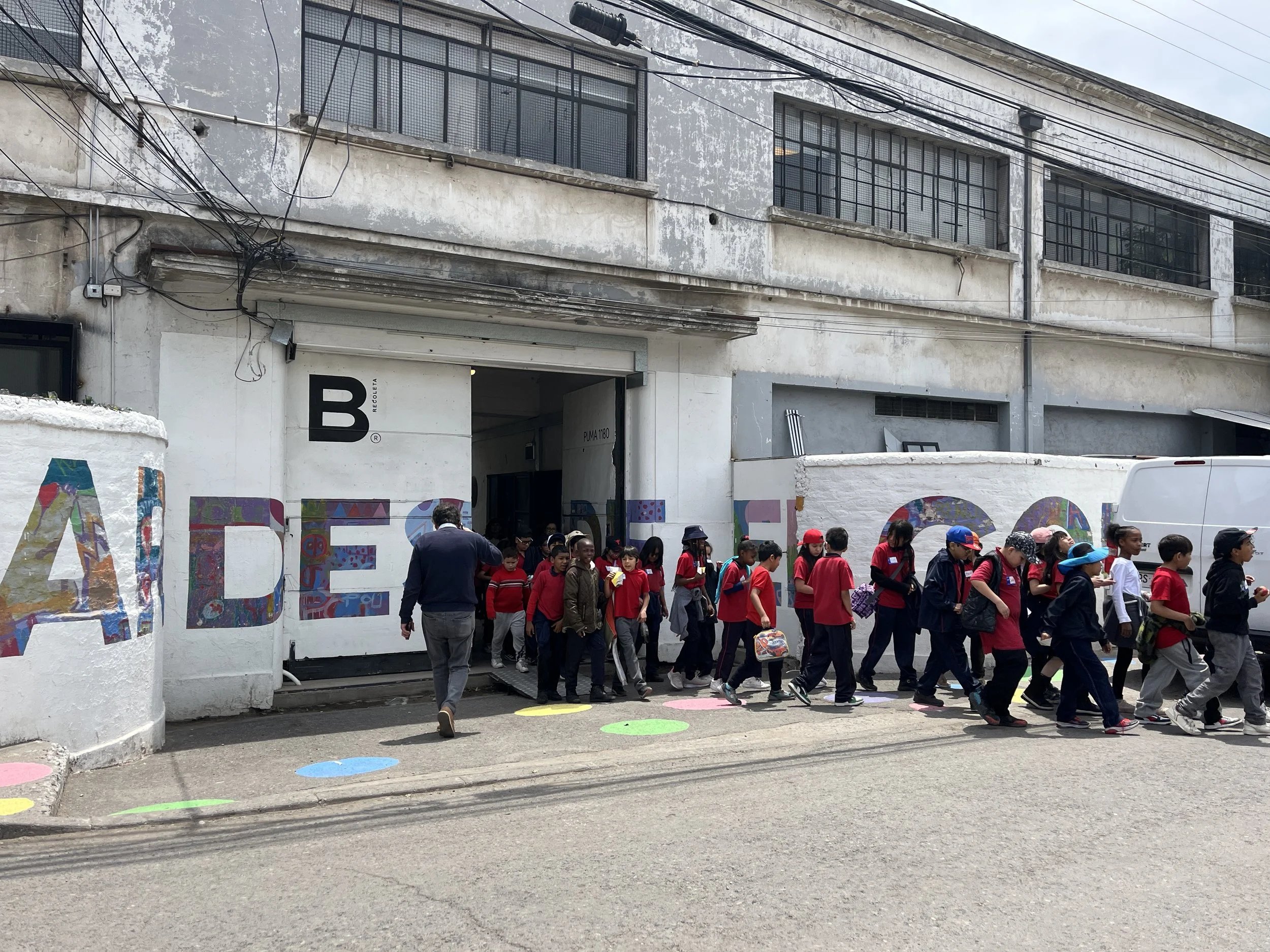
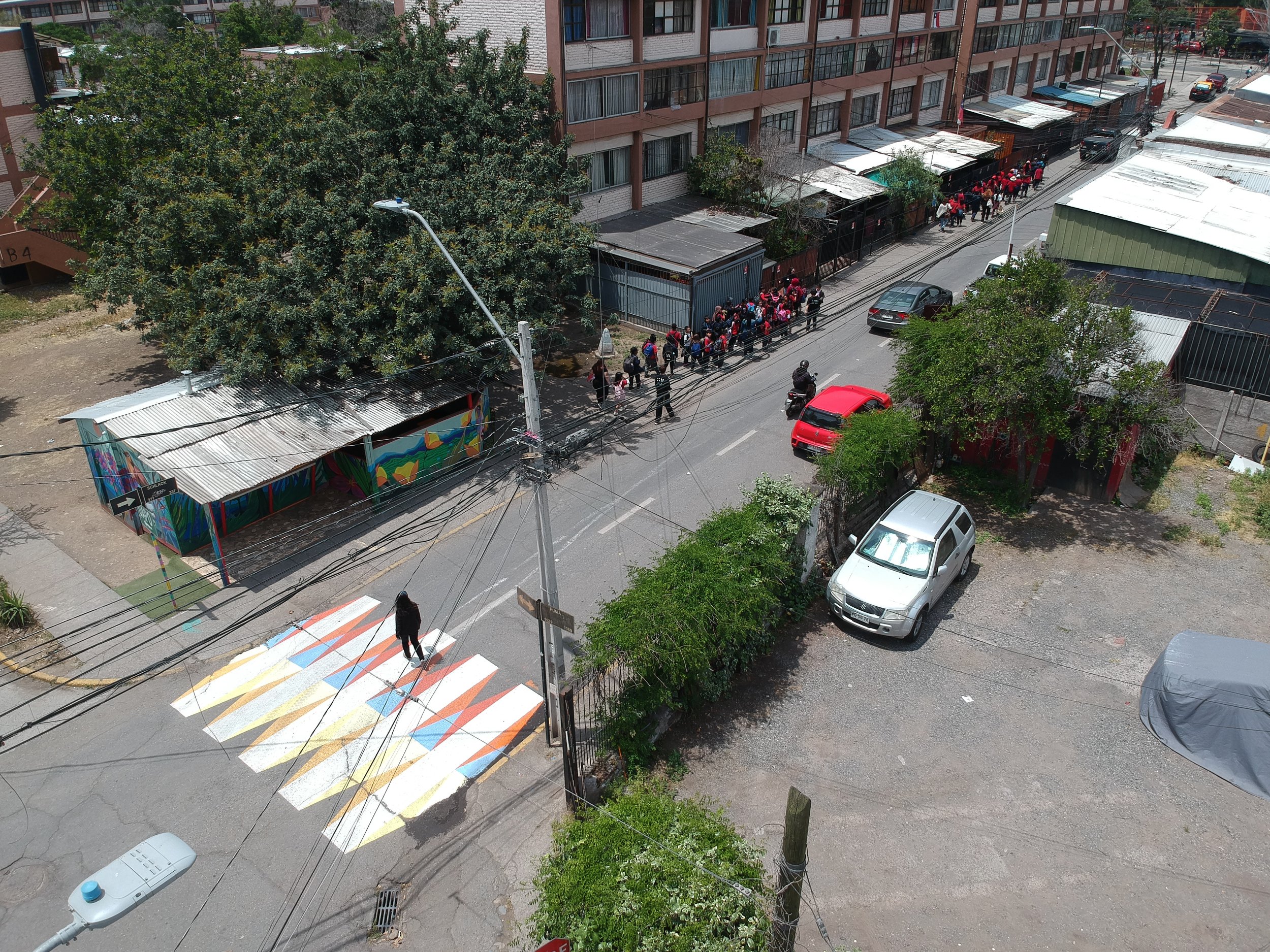
Improve road safety on the commute made by students from public transportation to the Espacio Blanco Recoleta (Mustakis Foundation).
Transform a functional route into a playful experience, fostering the well-being and stimulation of children and youth.
Test urban design solutions through an experimental pilot to inform a long-term plan for a permanent Childhood Route in the neighborhood.
Engage the local community in the care of public space, promoting co-responsibility for children's safety.
Methodology
The project applies Tactical Urbanism and Active Listening methodologies, structured into:
Participatory Diagnosis: Identification of critical points and the needs of students who commute on foot from major avenues.
Experimental Intervention (Pilot): Implementation of three key components:
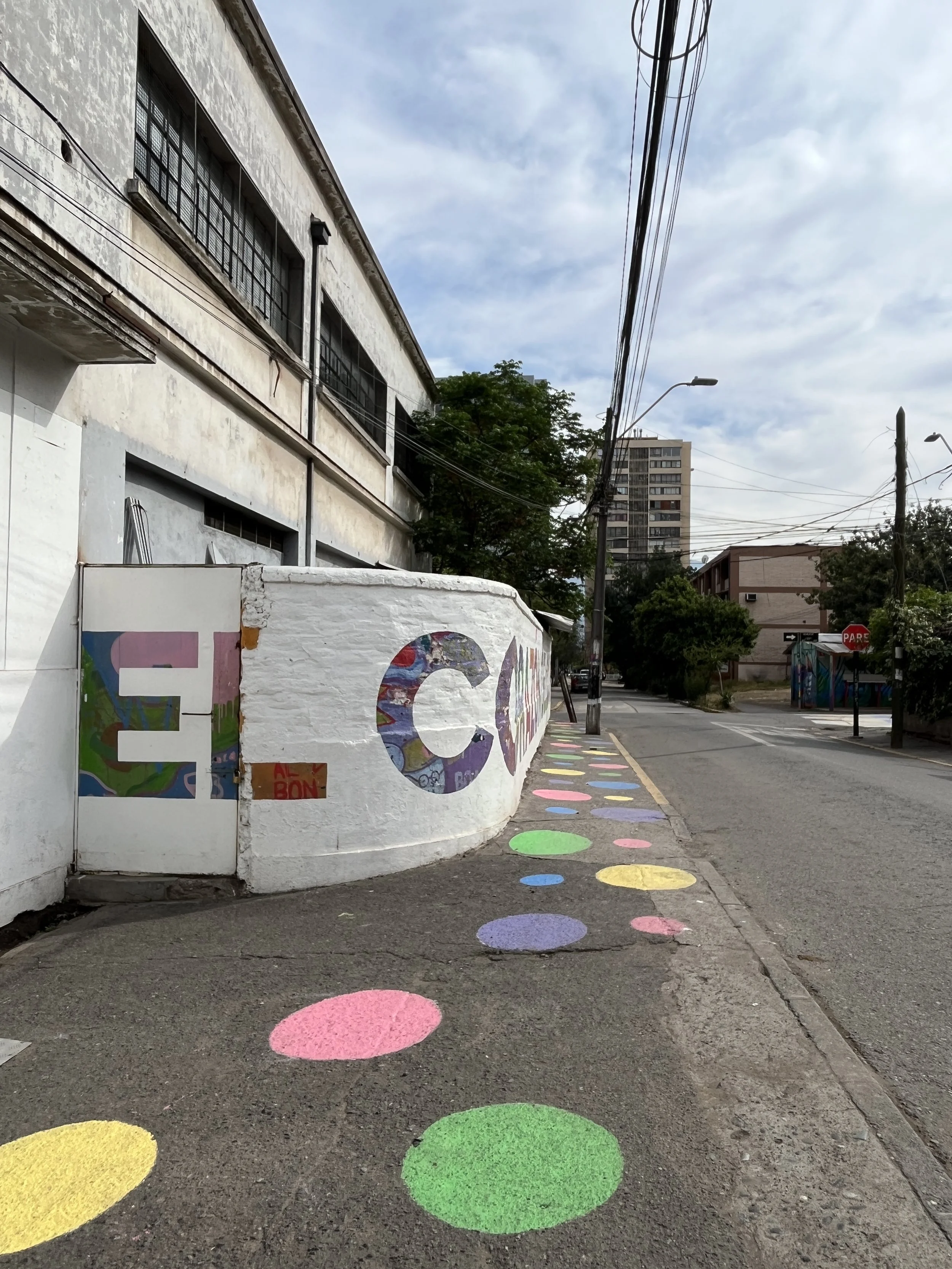
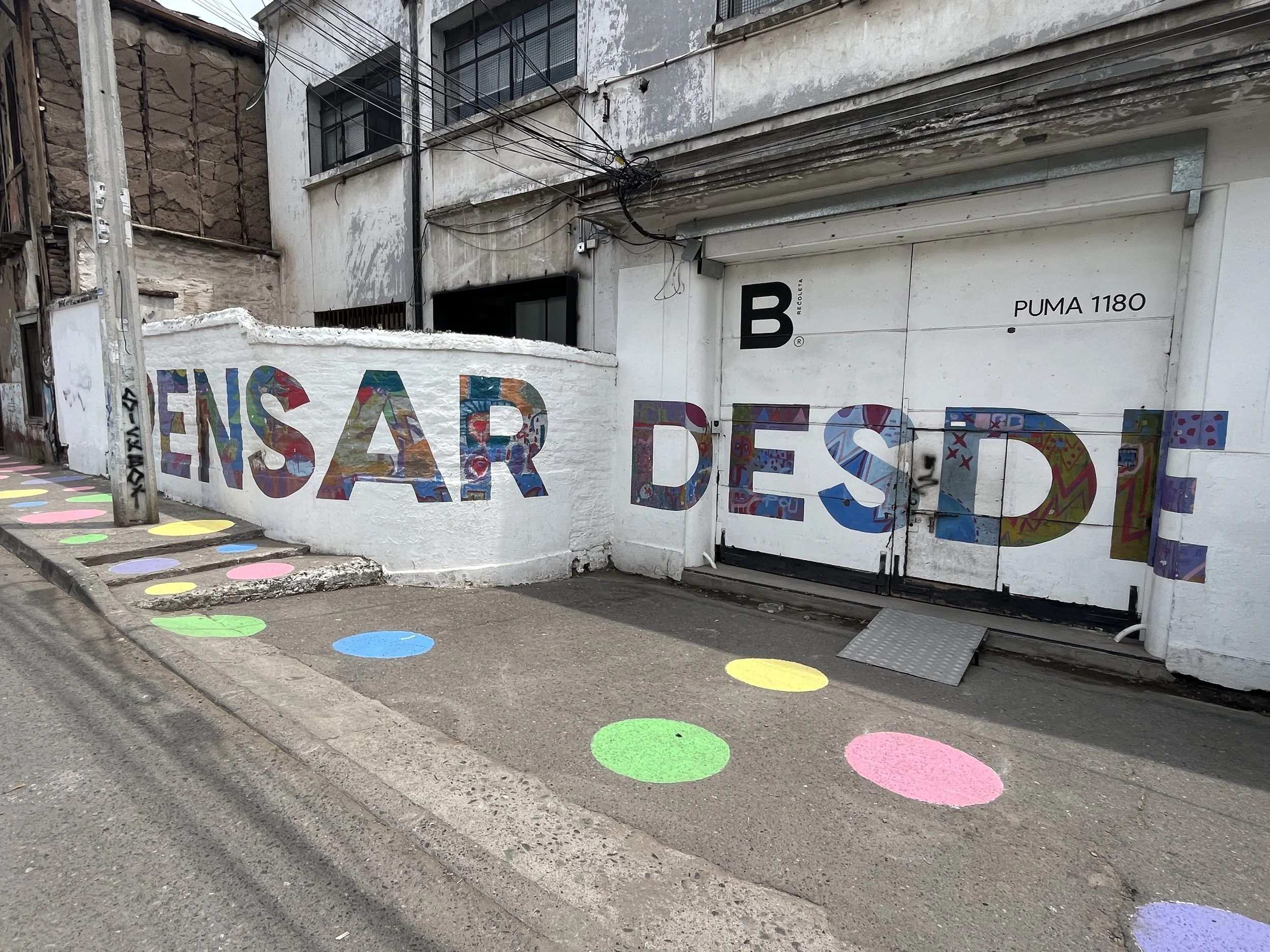
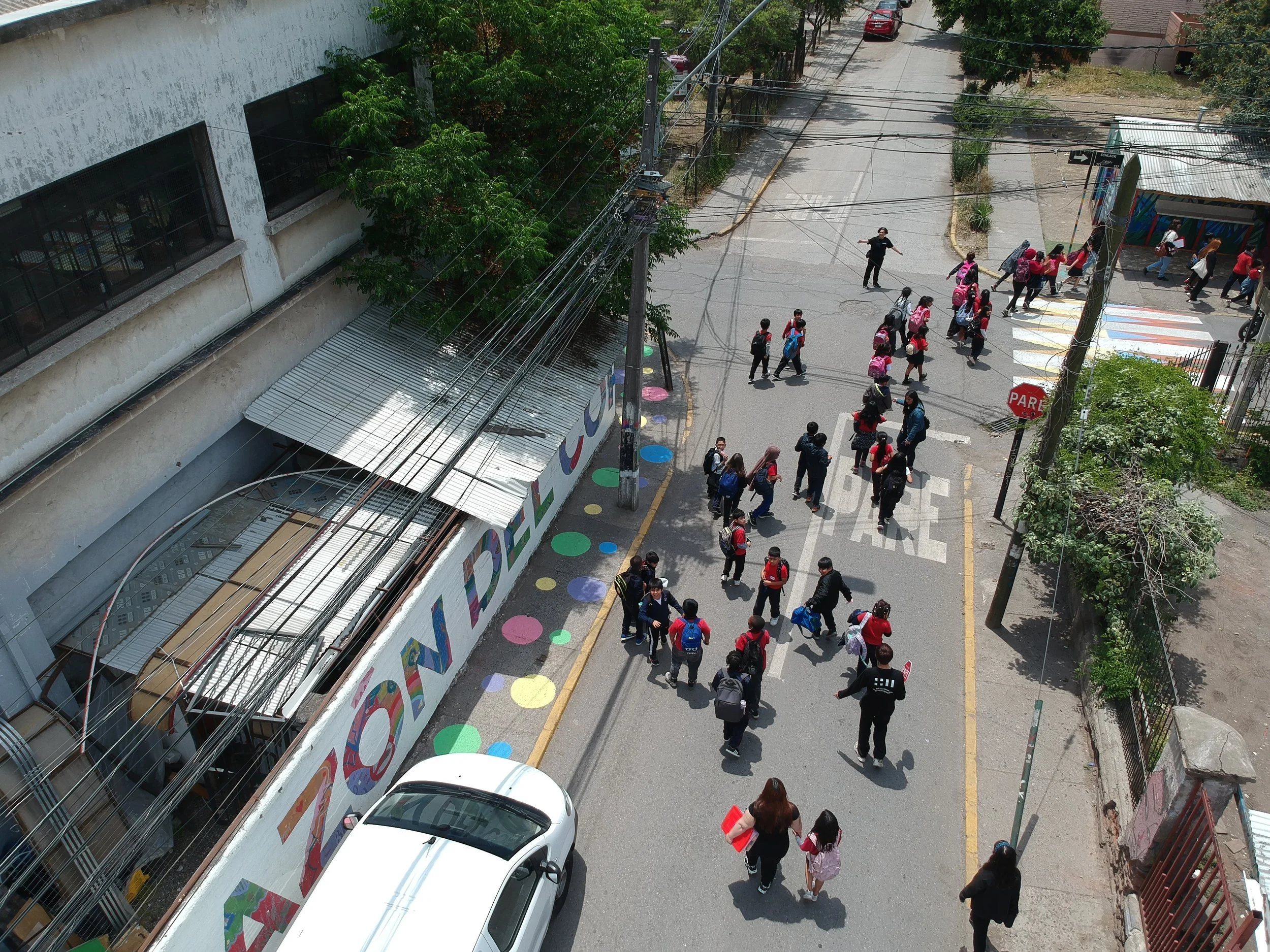
Urban Art: Sidewalk murals with playful patterns that signal the street as shared space and reduce vehicle speeds.
Urban Furniture: Installation of hammocks to encourage lingering and "natural surveillance," while preventing illegal car parking.
Speed Reducers: Use of temporary elements (cones) during school bus arrival and departure times.
Perception Measurement: Use of Ciudad Emergente’s interactive "Idea Tree" tool to collect qualitative feedback from children and neighbors regarding the intervention's impact.
Clients / Partners
Lead Partner: Mustakis Foundation (Espacio Blanco and Kaos program).
International Framework: International program of the NACTO Agency (National Association of City Transportation Officials).
Execution: Ciudad Emergente.
Results & Impact
Active Safety: Creation of a clear separation between vehicle and pedestrian lanes on streets that lack traffic lights or formal signage.
Identity and Belonging: The mural design used colors linked to neighboring house facades, extending the sense of "home" toward the sidewalk so residents feel responsible for its care.
Playful Experience: Transformation of a 5-minute walk into a game (jumping from point to point), improving children’s moods and readiness for educational activities.
Foundation for Permanence: Data collected through the Idea Tree validated the design for the future implementation of a definitive route connecting schools with metro and bus stops.
Conclusions
The Recoleta Childhood Route demonstrates that rethinking public space from a child's perspective allows for progress in protection, health, and holistic development support. The use of light, fast, and low-cost tactics proved that through art and strategic furniture, it is possible to change the street hierarchy—prioritizing children's safety over vehicle flow and turning an everyday commute into a space for learning and community.