Santiago Zero Carbon
Technological solutions and urban tactics to accelerate climate neutrality.
Place
Santiago, Chile
Year
2025
Objectives
To accelerate Chile's carbon neutrality commitment to the year 2050, focusing on the reduction of emissions in Santiago (which concentrates 20% of the national total).
To make visible climate solutions driven by technology and artificial intelligence (AI) to improve urban resilience.
To transform public space through interventions that degrade suspended pollutants and improve the pedestrian experience.
To educate and sensitize citizens about their carbon footprint and the environmental impact of transport on the health of the planet.
Methodology
The project was deployed as a living laboratory of climate solutions in the center of Santiago:
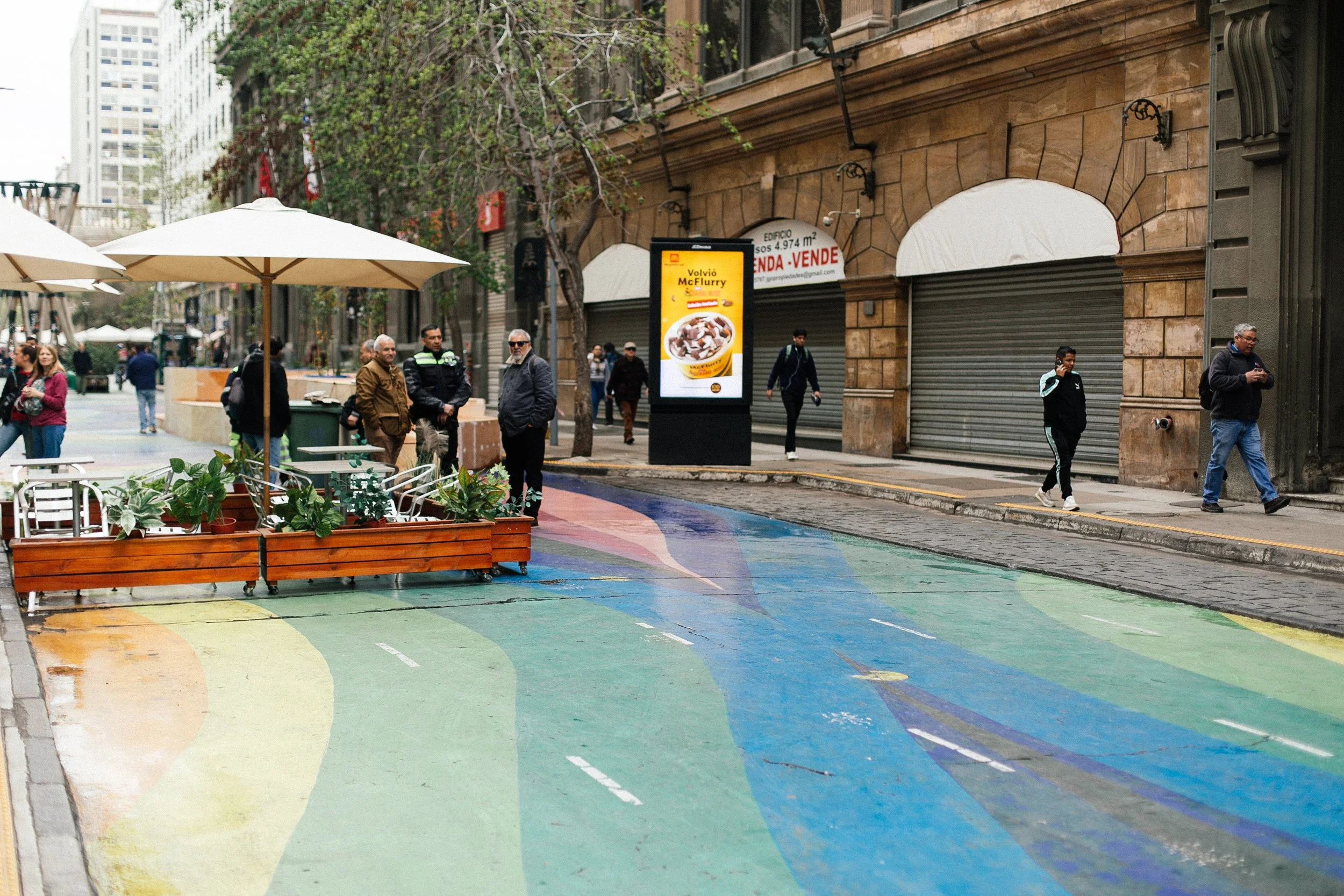
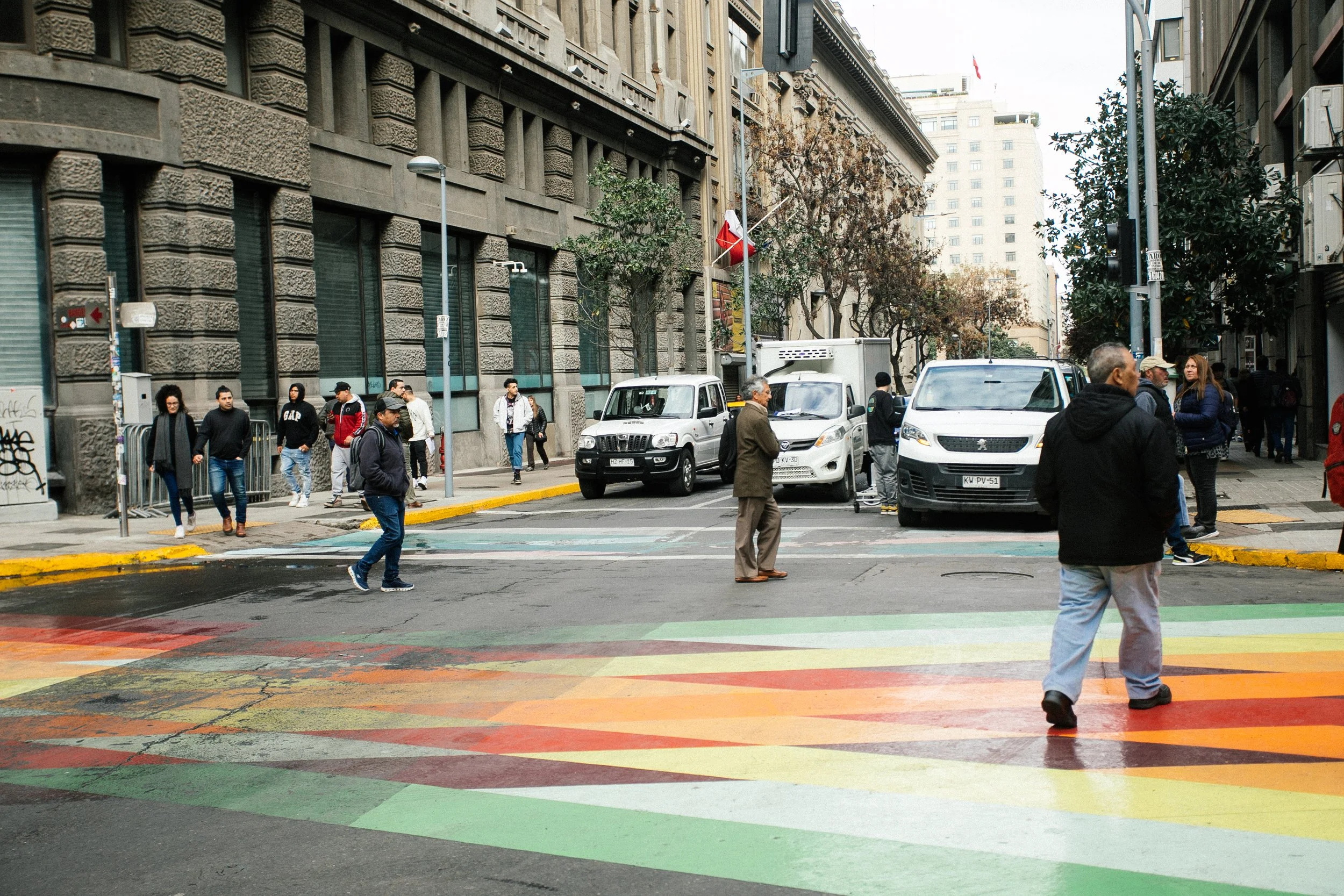
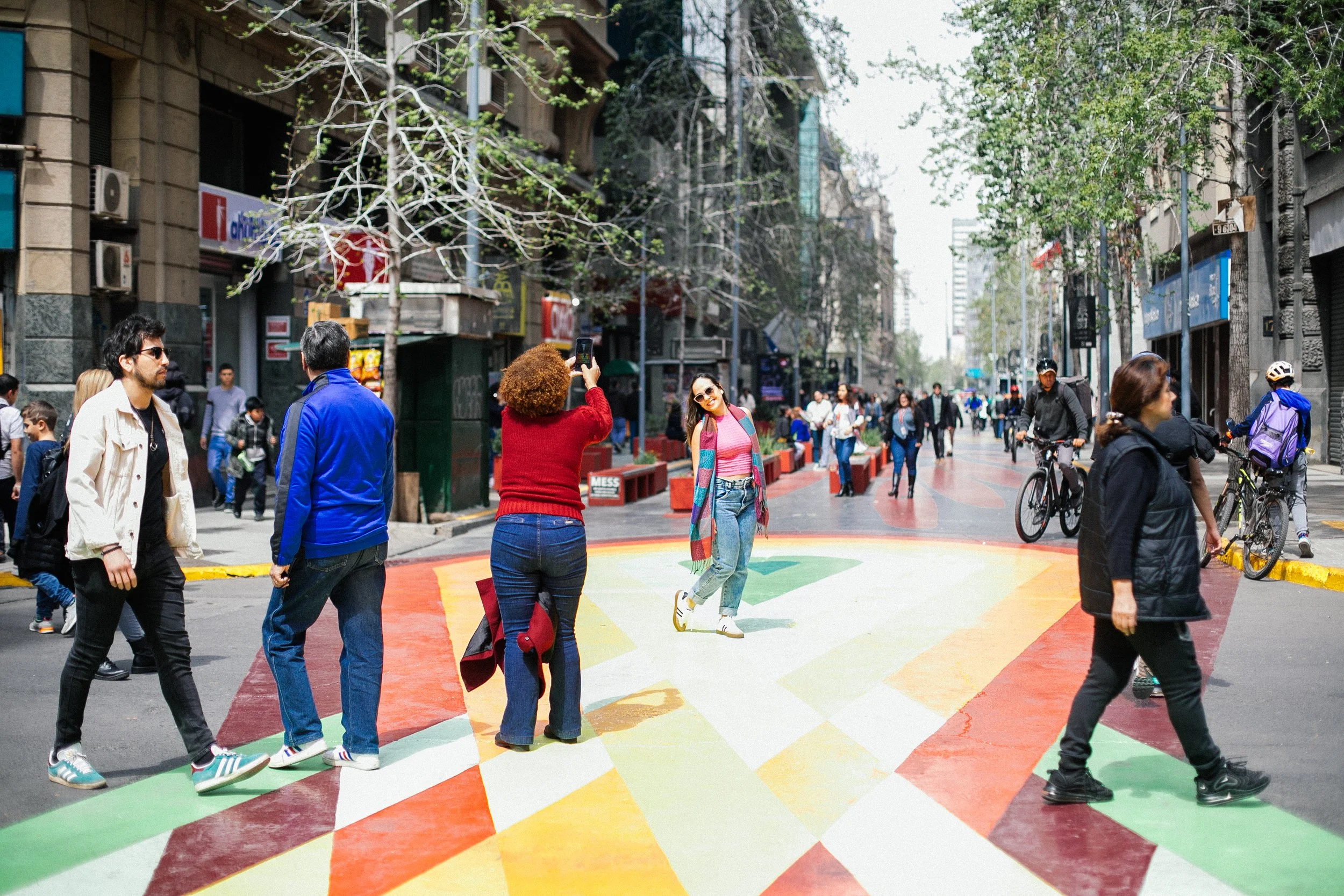
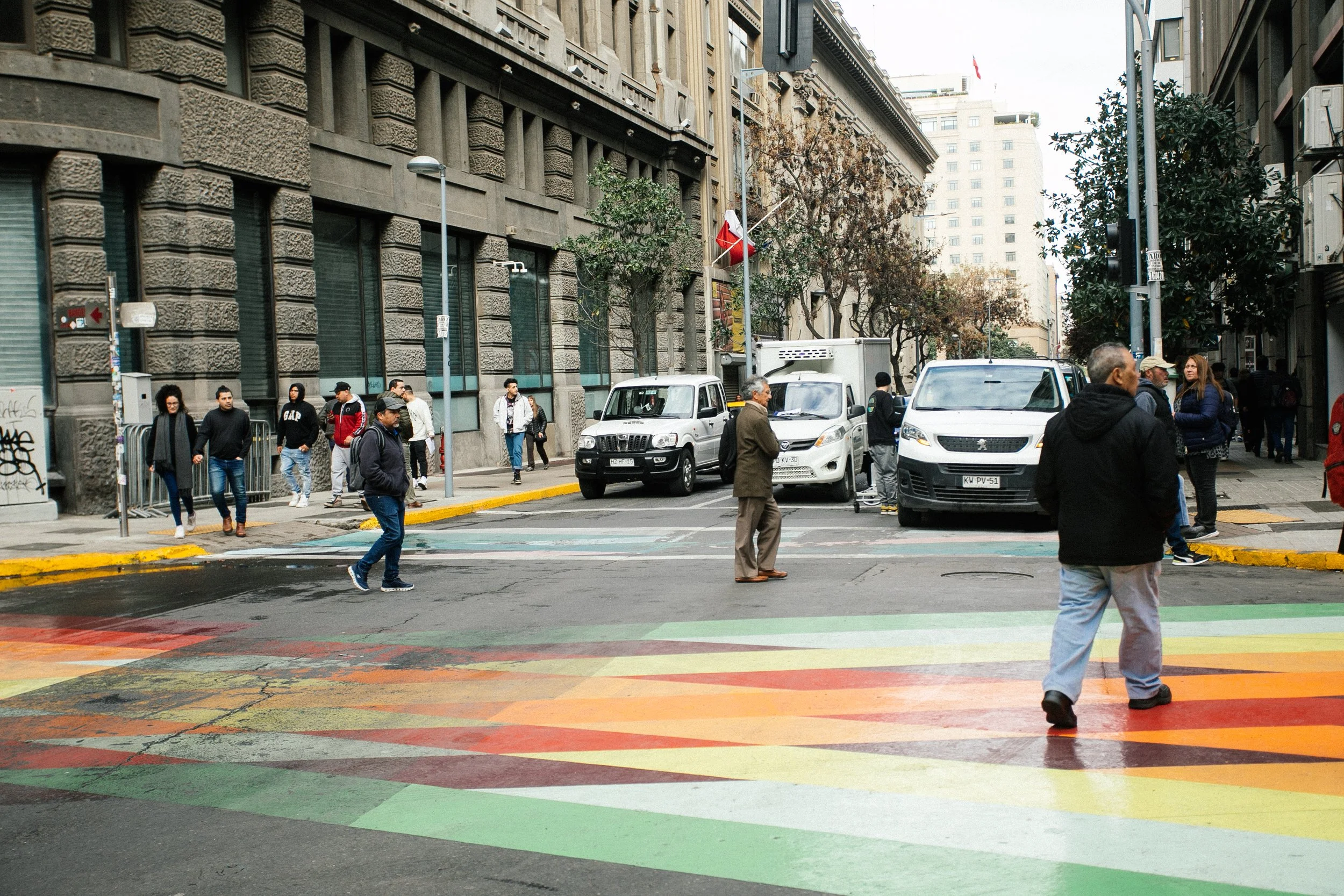
Tactical Urbanism with Nanotechnology: Implementation of two new pedestrian crossings at Agustinas and Bandera using a photocatalytic additive. This technology uses nanoparticles and polystyrene waste to transform CO2 and particulate matter into innocuous compounds.
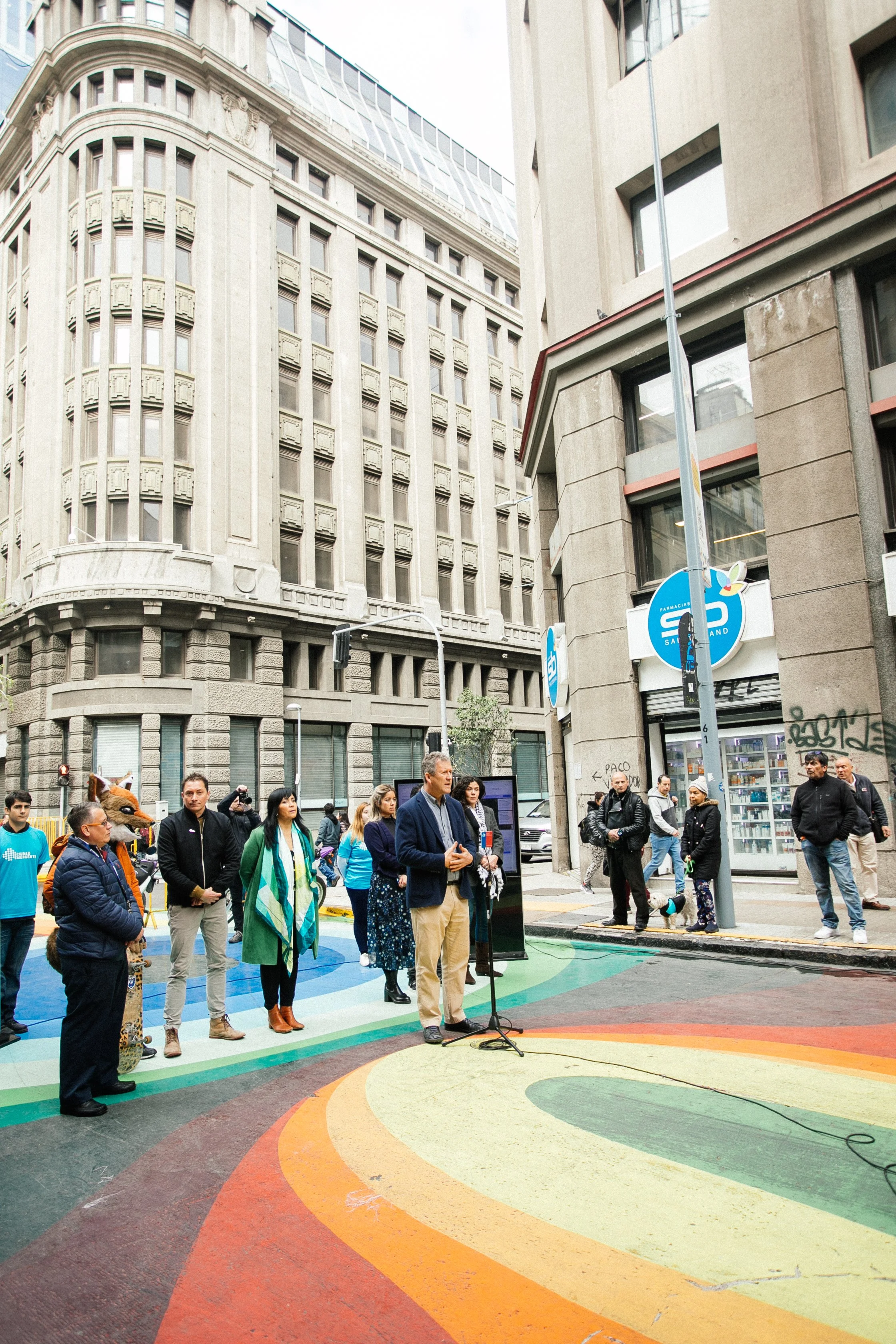
Integration of Digital Tools: Use of educational panels about Google technologies (Environmental Insights, FloodHub, and Maps) to show how AI can predict floods, alert for fires, and optimize sustainable mobility routes.
In Situ Citizen Participation: Application of our Idea Tree tool at the intersection with Matías Cousiño street to collect perceptions on mobility and sustainability.
Transmedia Storytelling Campaign: Creation of "Hook," a culpeo fox that, through social media, challenges citizens regarding their mobility habits and the use of fossil fuels.
Clients/Partners
Strategic Alliance: Google.
Collaborators: Municipality of Santiago (Paseo de la Movilidad).
Execution: Ciudad Emergente.
Results & Impacts
Direct Environmental Mitigation: The application of 110 m2 of photocatalytic paint allows for the degradation of 30 tons of CO2, an action equivalent to having planted 220 mature trees.
Improvement of the Urban Environment: Renovation of the furniture in Paseo Bandera (woodwork, planters) benefiting more than 88 thousand pedestrians who circulate daily through the sector.
Climate Education: Socialization of AI tools that allow for adaptation to climate change, from flood prevention to urban heat management.
Strategic Pedestrianization: Support for the Paseo de la Movilidad on Agustinas street, transforming a vehicular road into a safe and clean space for human movement.
Conclusions
Santiago Zero Carbon demonstrates that technology is not something abstract, but a tool that can be applied directly on the street to improve the air we breathe. The success of this project lies in the "virtuous alliance" between Google's artificial intelligence and Ciudad Emergente's tactical urbanism methodologies. By making pollution visible and offering tangible solutions, we manage to turn the challenge of carbon neutrality into a shared and achievable goal for all inhabitants of the city.