Participatory Cleanups
Collective actions to eradicate illegal dumpsites for the recovery of the urban environment.
Place
Multiple countries
Year(s)
2014-2024
Objectives
To eradicate illegal landfills and micro-dumpsites through coordinated action between the community and multiple institutional actors.
To generate a cultural shift among inhabitants regarding solid waste management and shared responsibility for public space.
To trigger long-term transformation processes, using cleaning as the first step for the comprehensive rehabilitation of neighborhoods and ravines.
To advance the Sustainable Development Goals (SDGs), specifically Sustainable Cities (11) and Climate Action (13).
Methodology
Participatory cleaning is deployed as a technical and social procedure requiring high coordination:
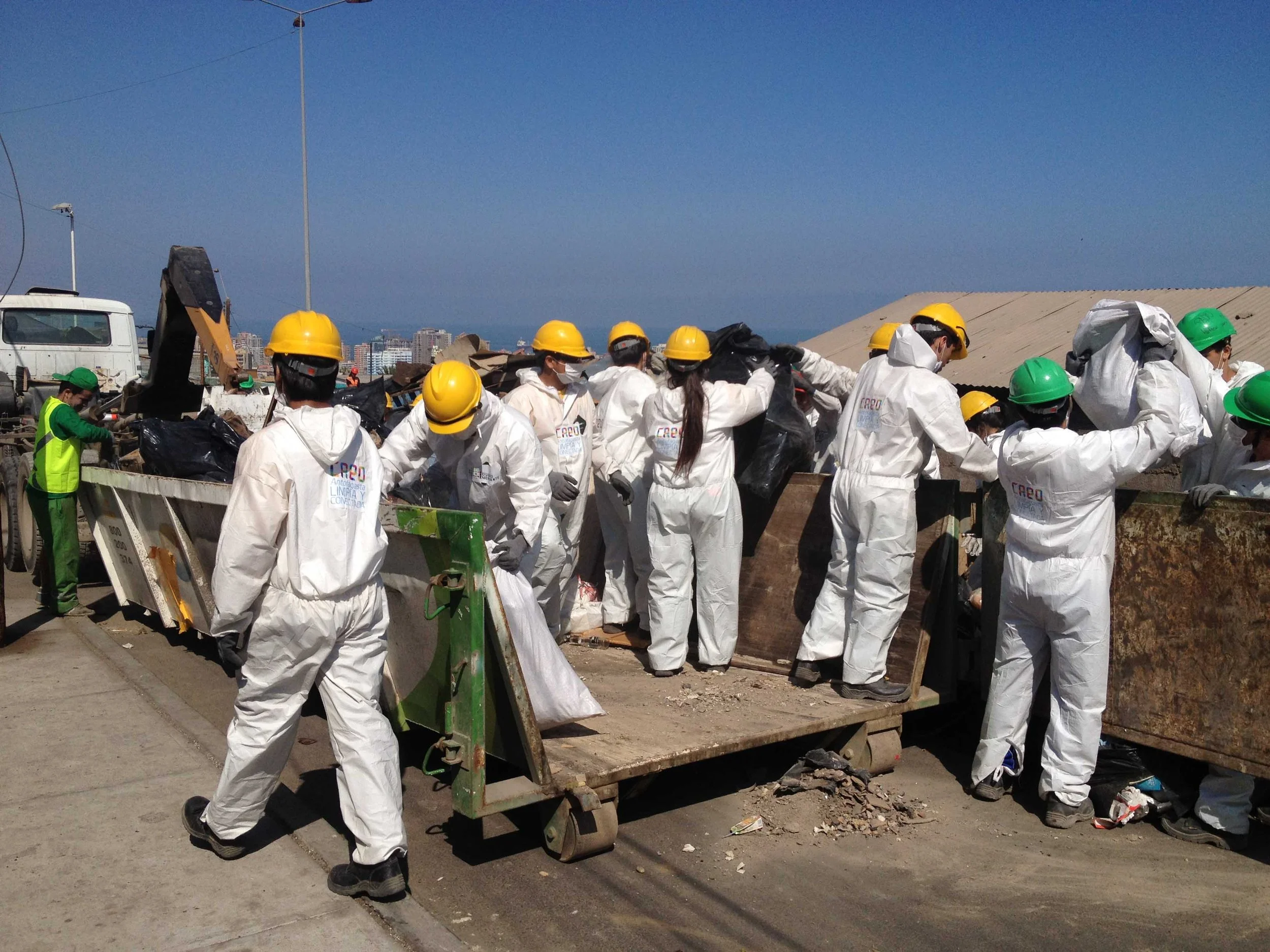
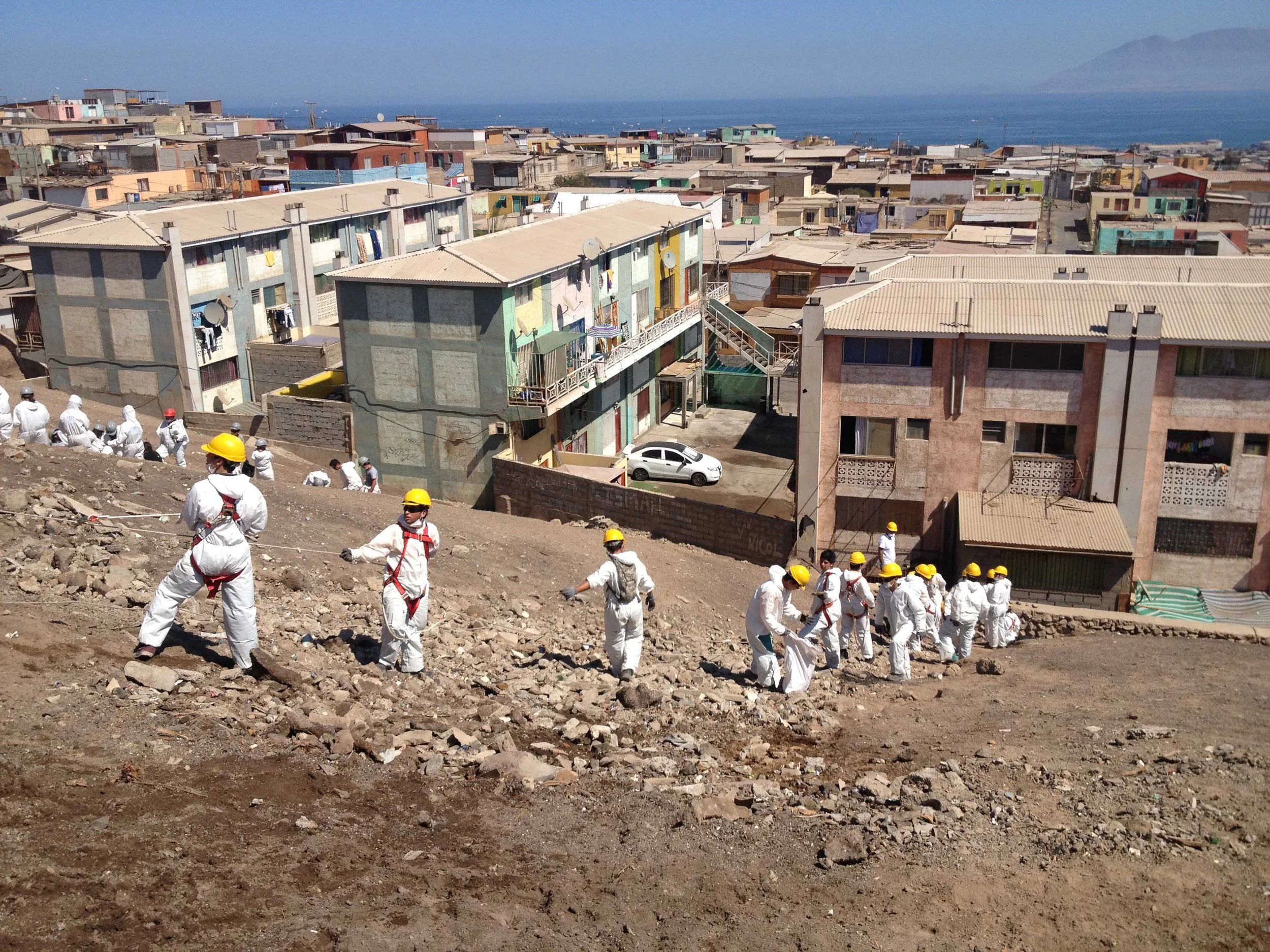
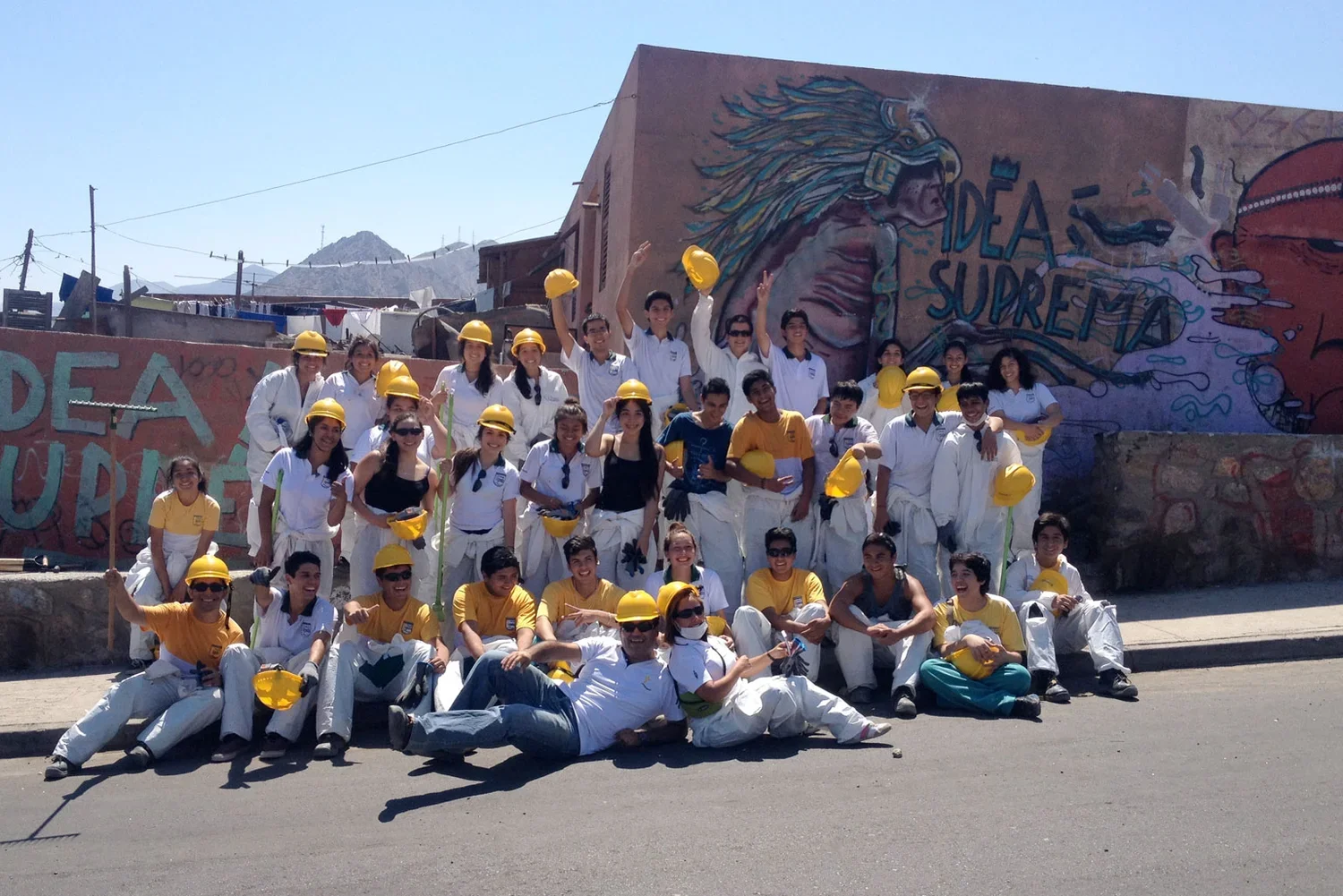
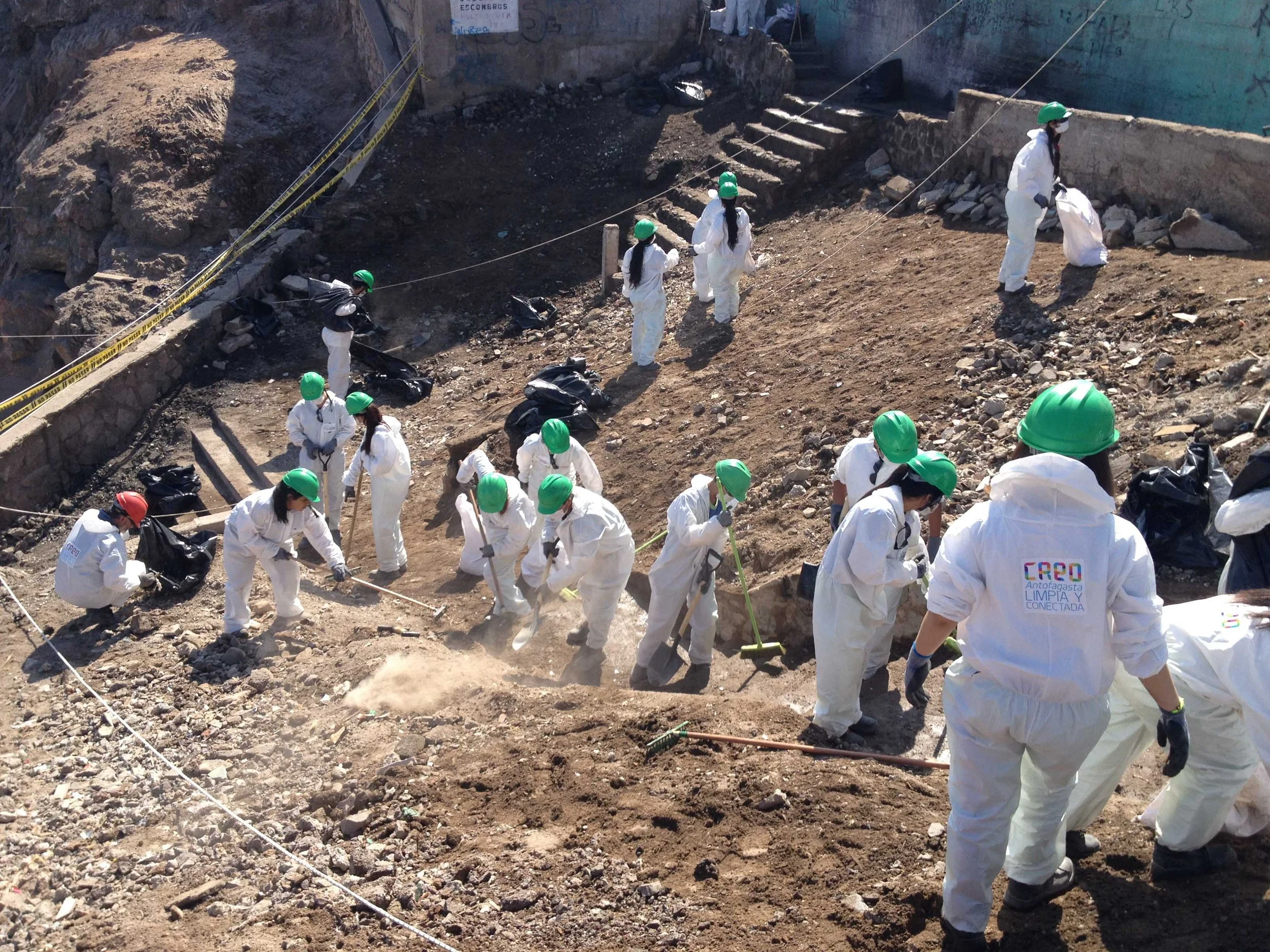
Formation of Brigades (Ecoviandantes): Organizing volunteers, students, and neighbors into specialized work teams for the segregated removal of waste.
Public-Private-Academic Alliances: Logistic coordination that integrates everything from municipalities and companies to educational establishments and security forces (Firefighters, Police, PDI).
Waste Management and Classification: Implementation of source-separation protocols (glass, plastic, aluminum, organic) to ensure the effective recycling of collected materials.
In-Situ Environmental Education: Using the day as an open classroom where experts (such as the "Waste Wizard") raise awareness about the impact of pollution on critical ecosystems like ravines and gorges.
Clients / Partners
National (Antofagasta): CREO Antofagasta Plan, Municipality of Antofagasta, CMDS, and a network of more than 10 educational establishments (San Esteban, Netland, San Agustín schools, among others).
International (Guatemala): UNDP, Chilean International Cooperation Agency (AGCID), Reciclemos.gt, and Jungla Urbana.
Community: Neighborhood Councils of Villas Las Condes, La Corvallis, Miramar Norte, and René Schneider.
Results & Impact
Massive Mobilization: More than 300 active volunteers per session, achieving cleaning coverage in critical points of high geographic complexity.
Ecosystem Recovery: In Guatemala City, ravine areas affected by erosion and water pollution were rescued, collecting and recycling dozens of bags of waste.
Enabling New Uses: The eradication of trash allowed for the start of public space activations, transforming focal points of insalubrity into safe areas for play and culture.
Circular Management: Integration of external waste managers to guarantee that the removed trash is converted into raw material, closing the waste's life cycle.
Conclusiones
Participatory Cleanups demonstrate that trash is a problem of design and a lack of social cohesion. By mobilizing "Ecoviandantes" and students, Ciudad Emergente transforms a sanitary task into an act of civic duty and love for the neighborhood. This tactic is the "cornerstone" of our methodology: before building the city of our dreams, we must heal the ground we inhabit. A clean ravine is not just a recovered landscape; it is a community that has decided to stop being a spectator and become the guardian of its own environment.