The Latin Table
Gastronomy and culture as bridges for migrant integration in Latin America.
Place
Multiple countries
Year(s)
2019-2020
Objectives
To promote peaceful coexistence and integration between migrants and local communities across different American countries.
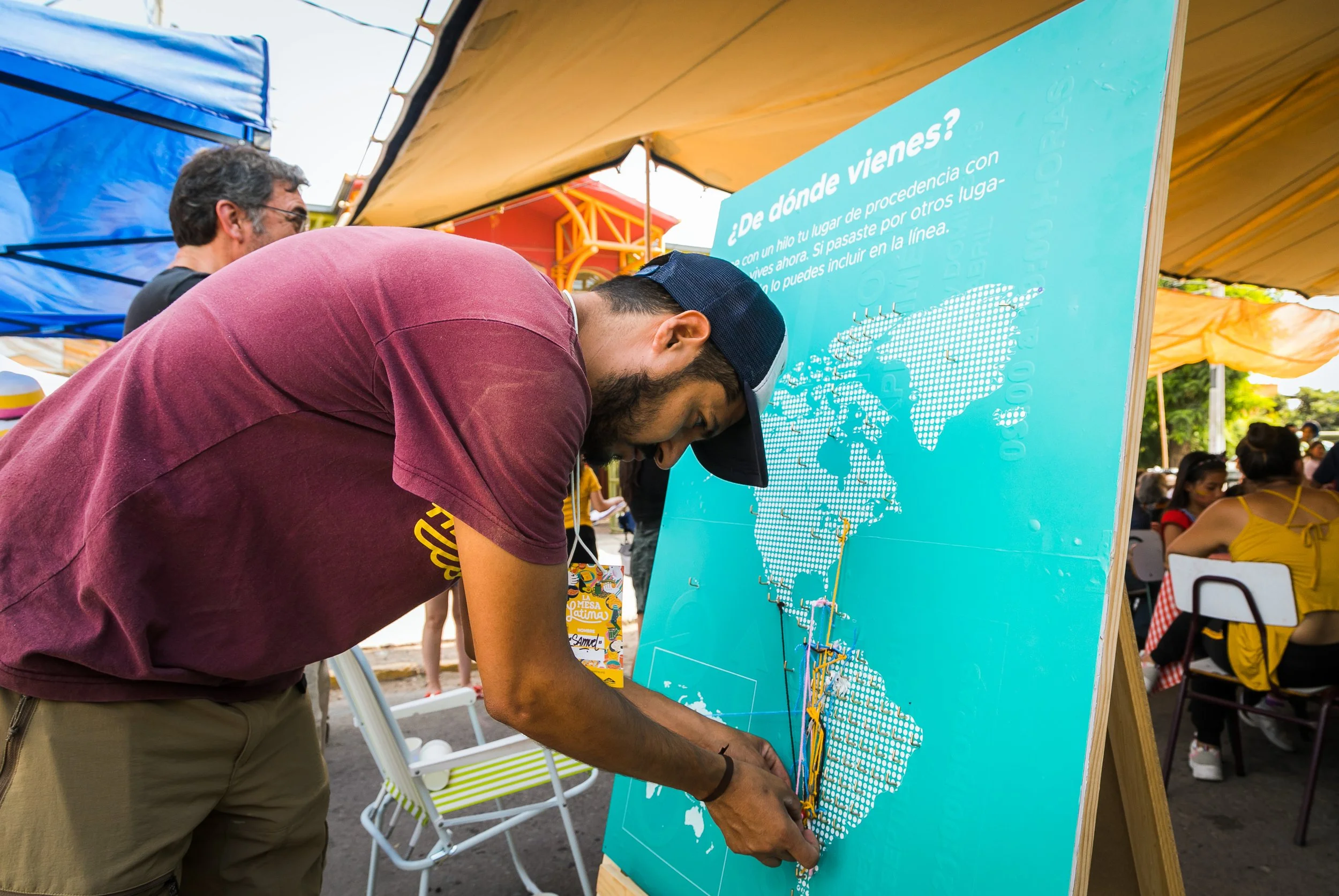
To reduce prejudice and stereotypes by facilitating dialogue and mutual understanding through culture and gastronomy.
To strengthen democracy and respect for human rights by creating support networks and participation in public spaces.
To scale the integration methodology by providing free tools, allowing citizens to become the drivers of change in their own neighborhoods.
Methodology
The project uses food as a social catalyst and is based on a replicable citizen activation model:
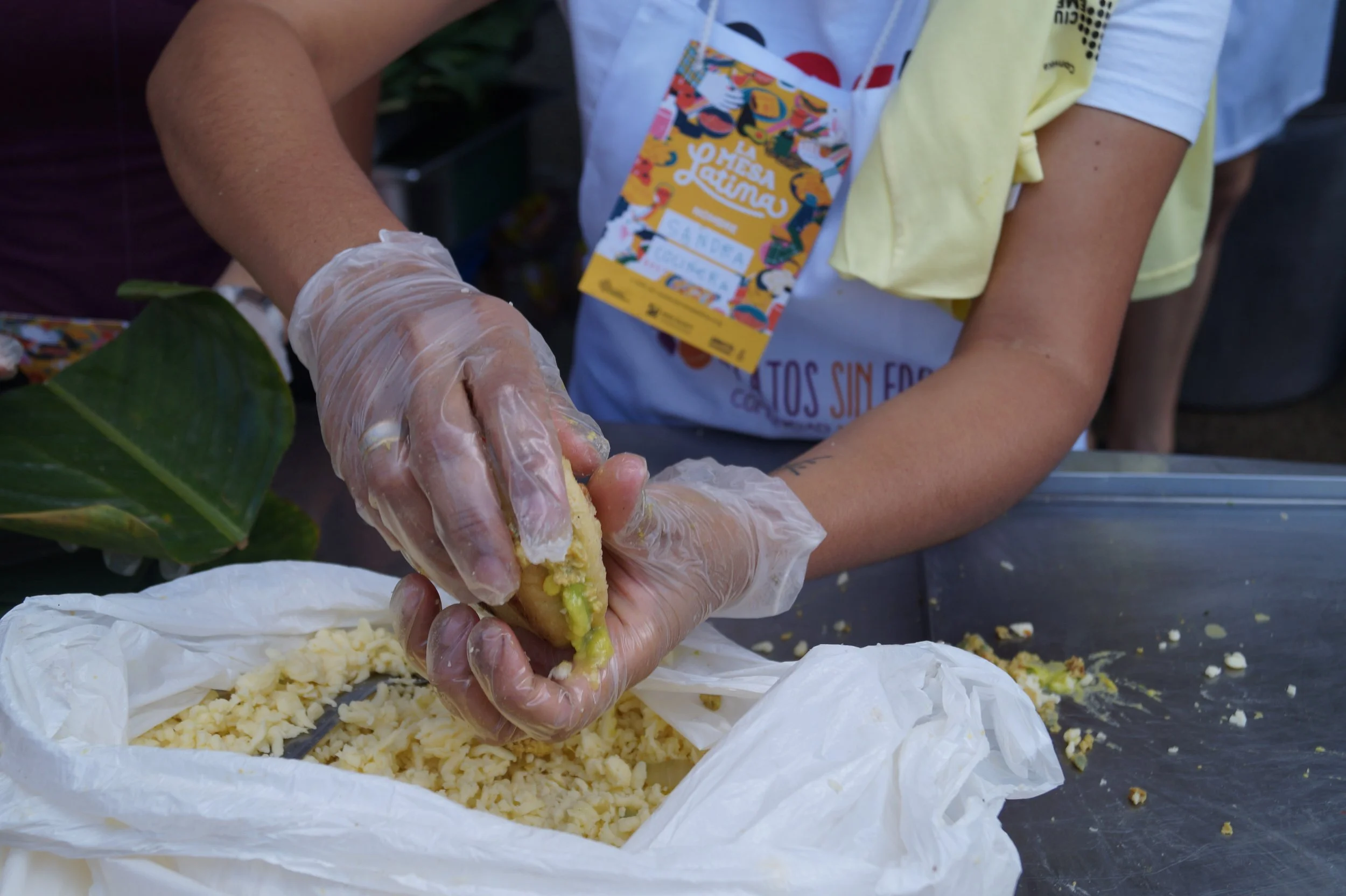
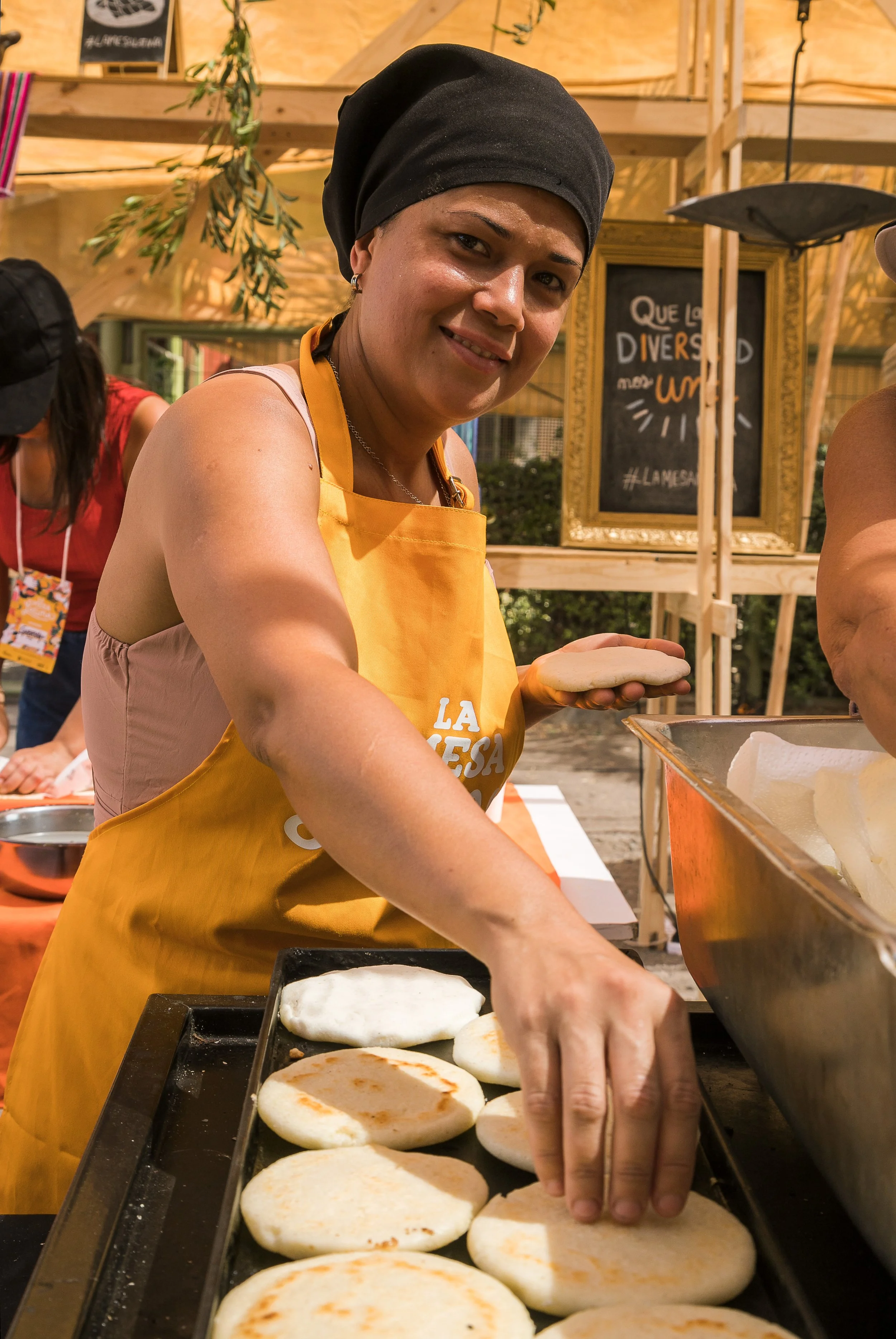
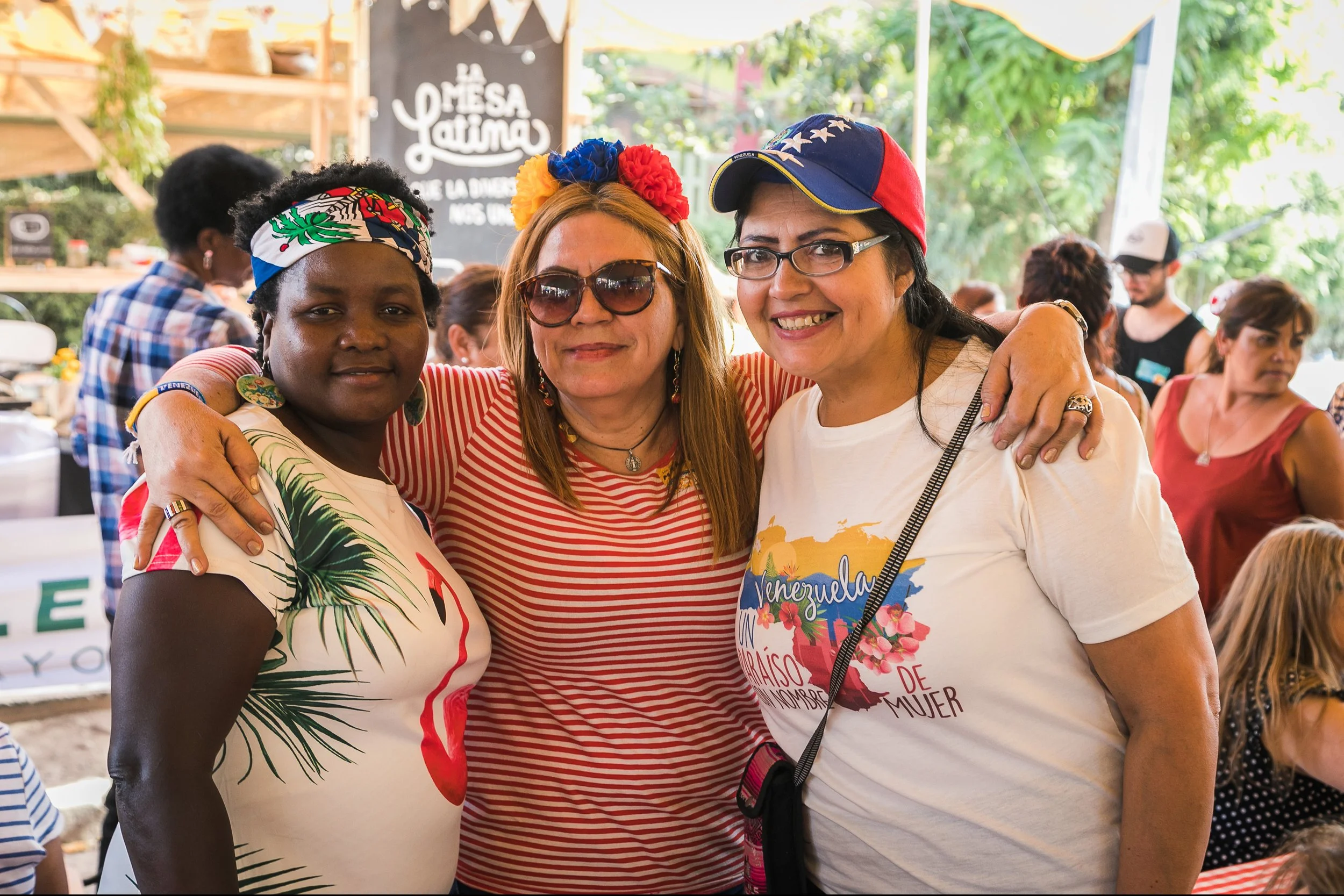
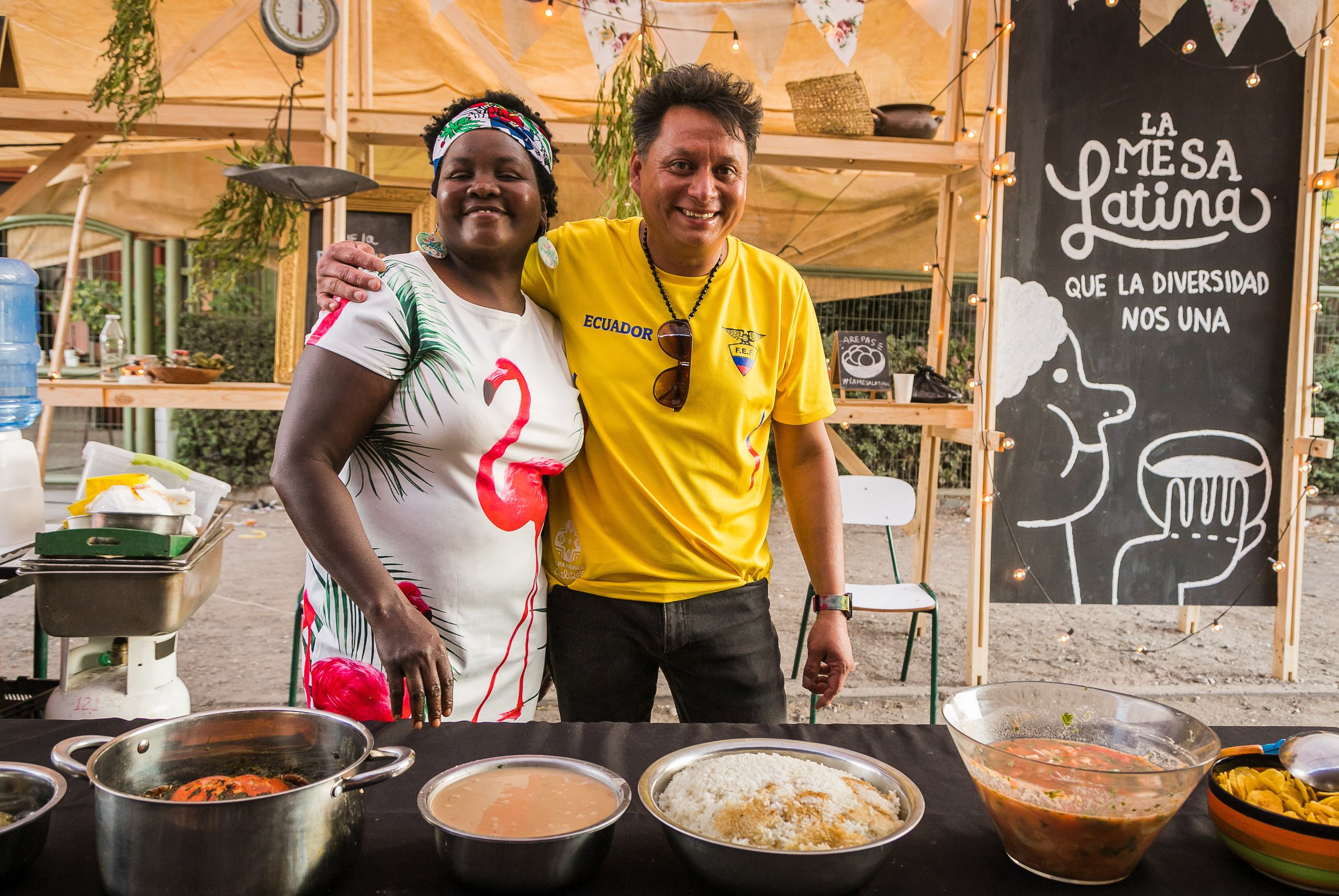
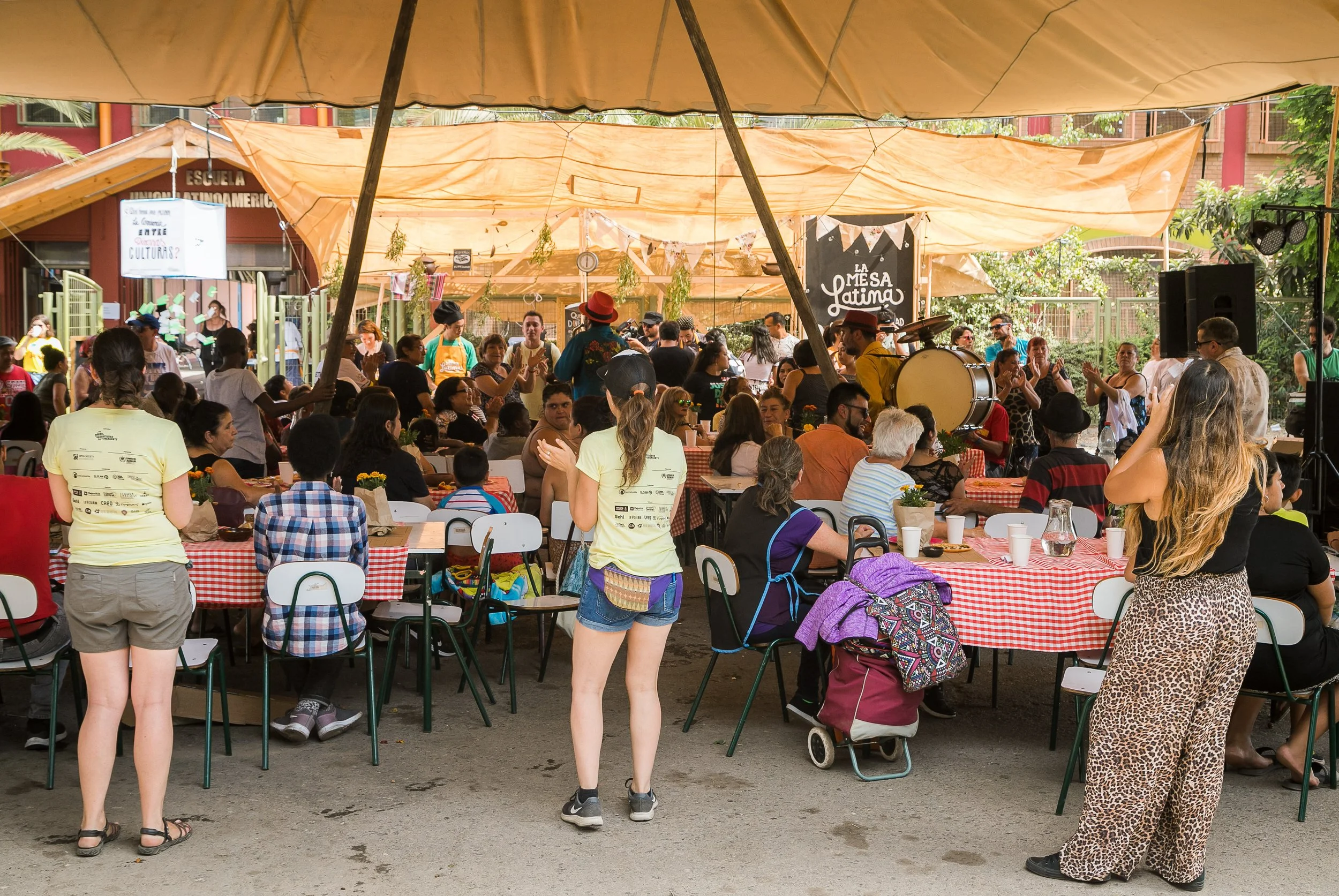
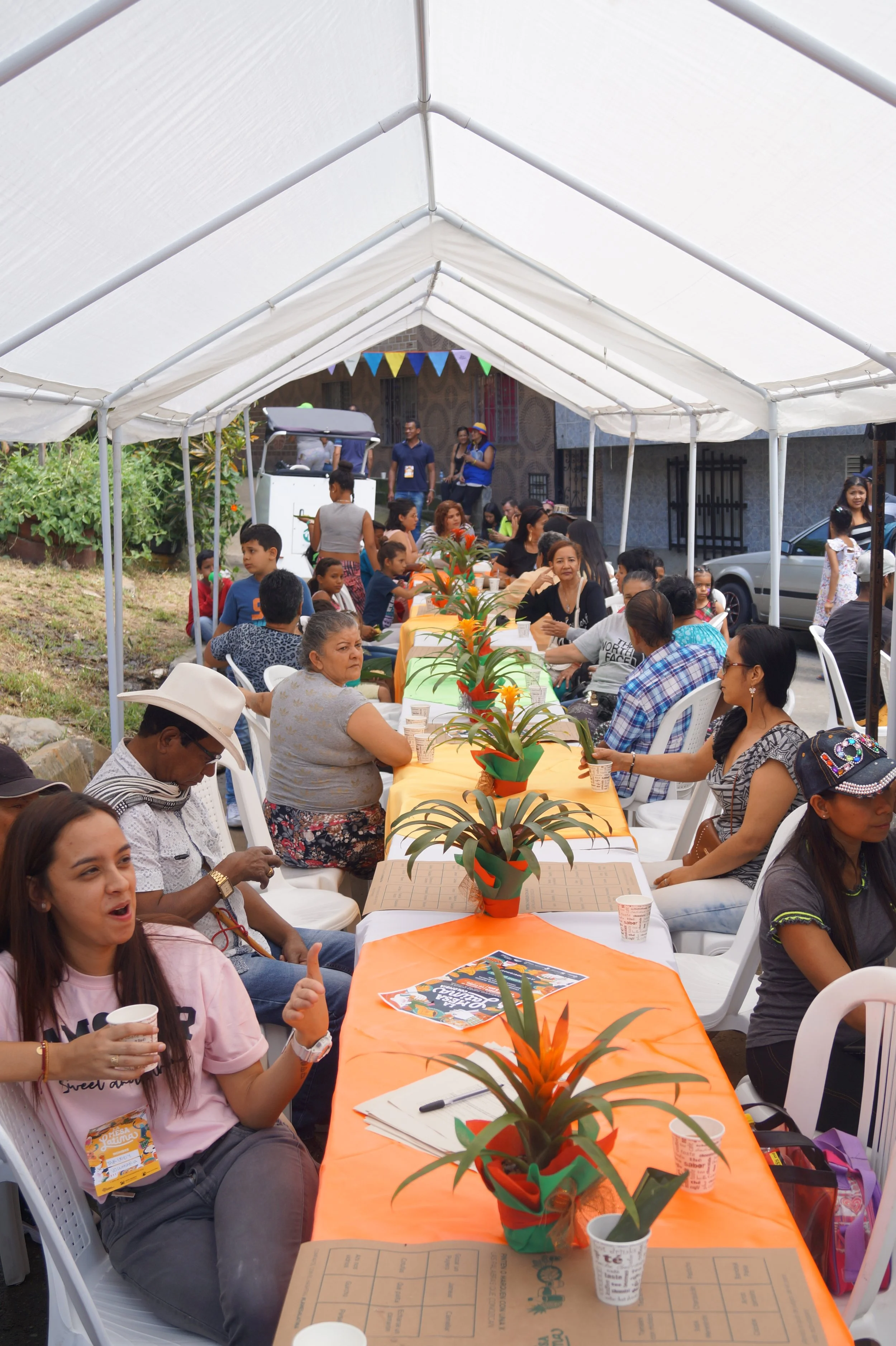
Gastronomic Encounters: Organizing community meals where traditional dishes are shared, transforming the table into a space for horizontal dialogue.
The Latin Table Kit: Design of a free co-creation tool (available in physical and digital formats) that includes guides, posters, and methodologies so that any person or organization can replicate the event.
Regional Deployment: Strategic implementation in key cities with high migration rates: Medellín (Colombia), Lima (Peru), and Santiago (Chile).
Digital Platform: Creation of the official website (www.lamesalatina.org) as a resource repository and a hub for the community interested in uniting neighborhoods.
Clients / Partners
Funding: Open Society Foundations.
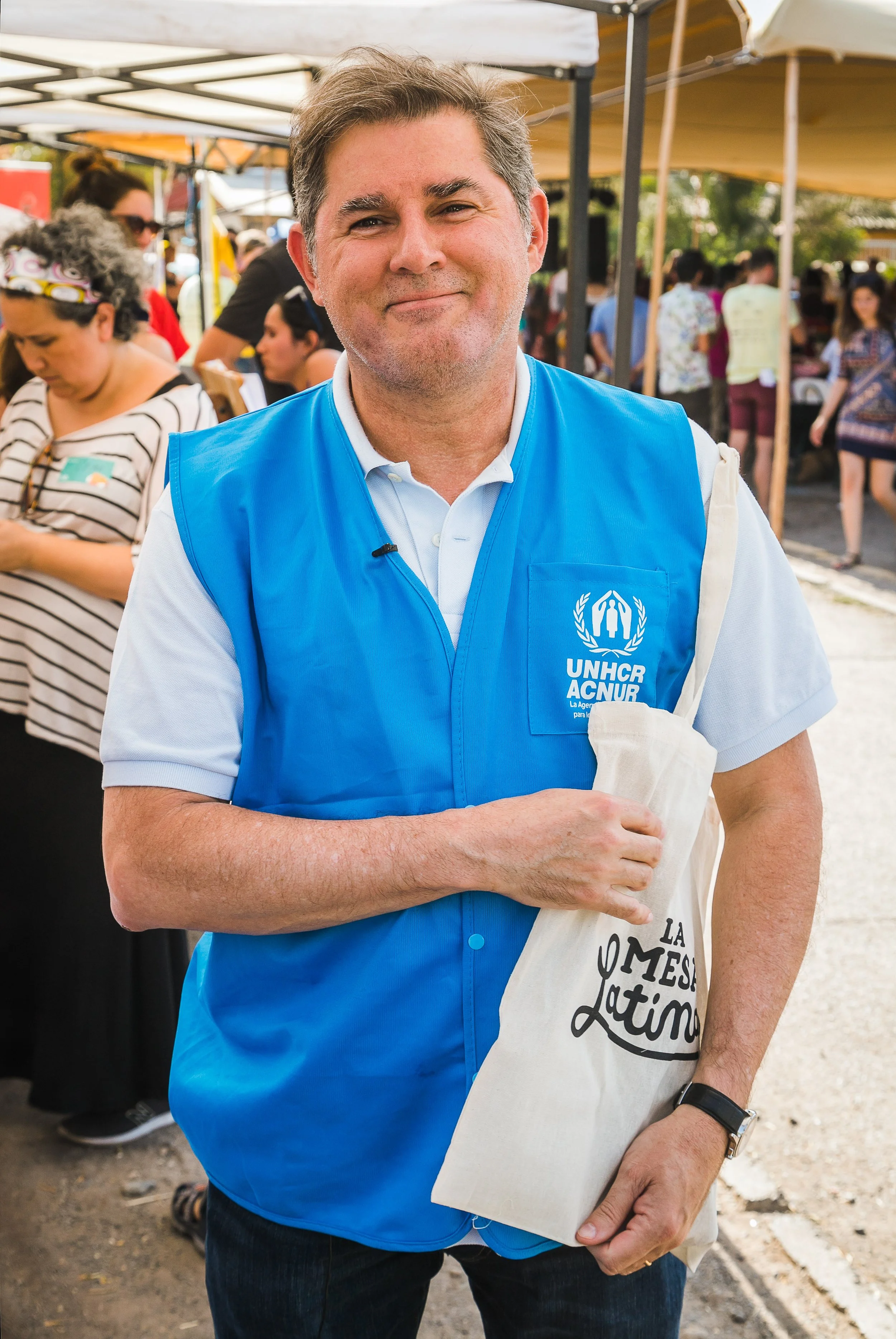
Sponsorship: UNHCR (The UN Refugee Agency).
Execution: Ciudad Emergente.
Results & Impact
Transnational Impact: Successful implementation in three countries, validating the methodology across diverse cultural and social contexts in Latin America.
Citizen Empowerment: The distribution of the kit (physical and digital) allowed the initiative to evolve from a single event into a free-to-use tool for the community.
Building Social Capital: Generation of tangible support networks between locals and foreigners, improving safety and cohesion in the intervened neighborhoods.
Human Rights Advocacy: Positioning cultural integration as a concrete action to strengthen democracy in the region.
Conclusiones
The Latin Table demonstrates that gastronomy is the universal language of hospitality. By using food as a bridge, Ciudad Emergente successfully brings complex human rights and migration issues down to the neighborhood and table scale. This project confirms that when people share their culture and history, barriers dissolve, and a more empathetic and resilient regional citizenship emerges. It is an exportable model of social innovation that puts the "technology of encounter" at the service of peace and integration.