Urban95: Recoleta
Consolidating child-friendly urban environments for early childhood and their families.
Place
Santiago, Chile
Year
2024
Objectives
Implement the Proximity of Care (PoC) Design Guide to transform vulnerable urban settings into child-friendly spaces.
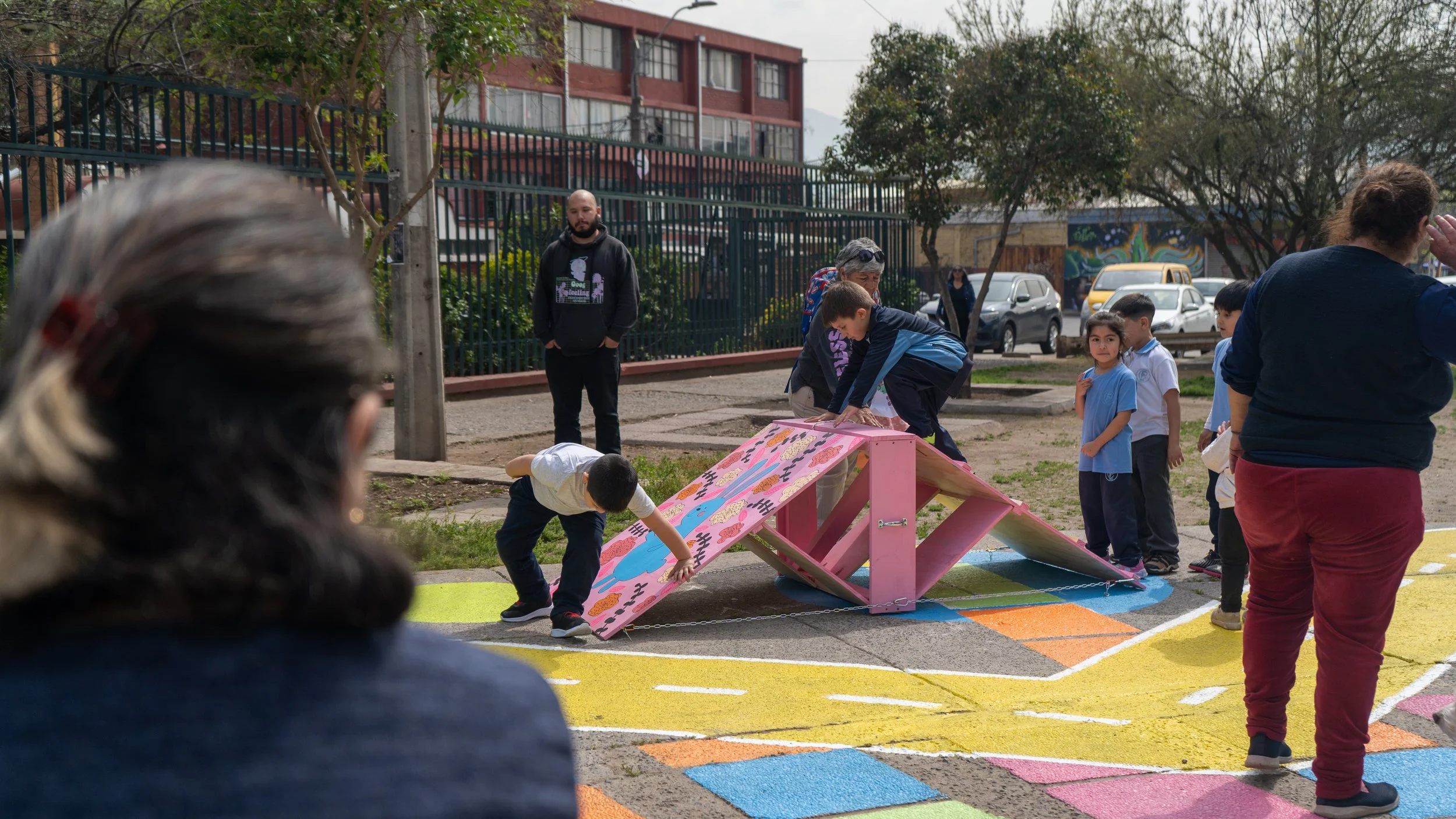
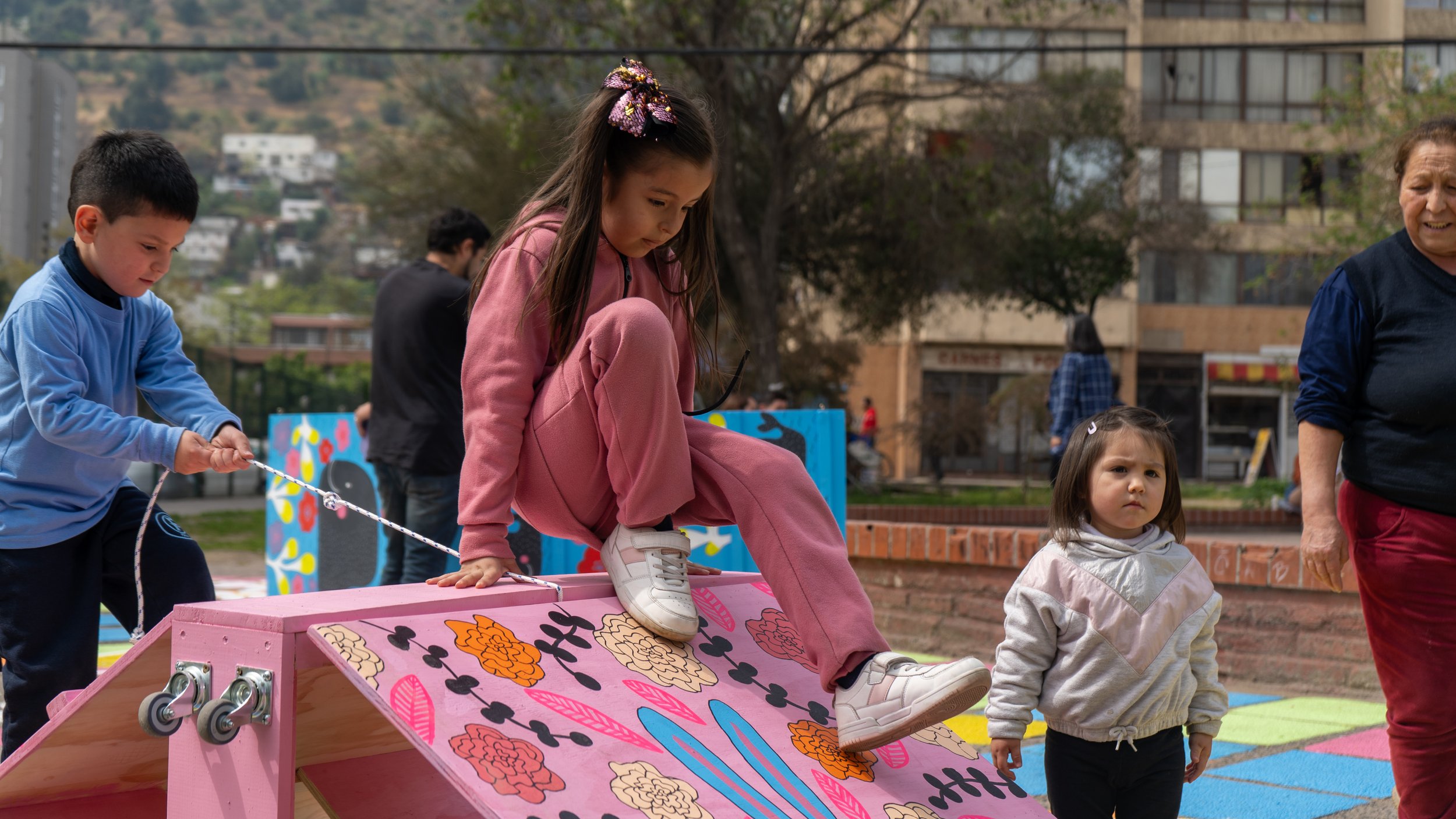
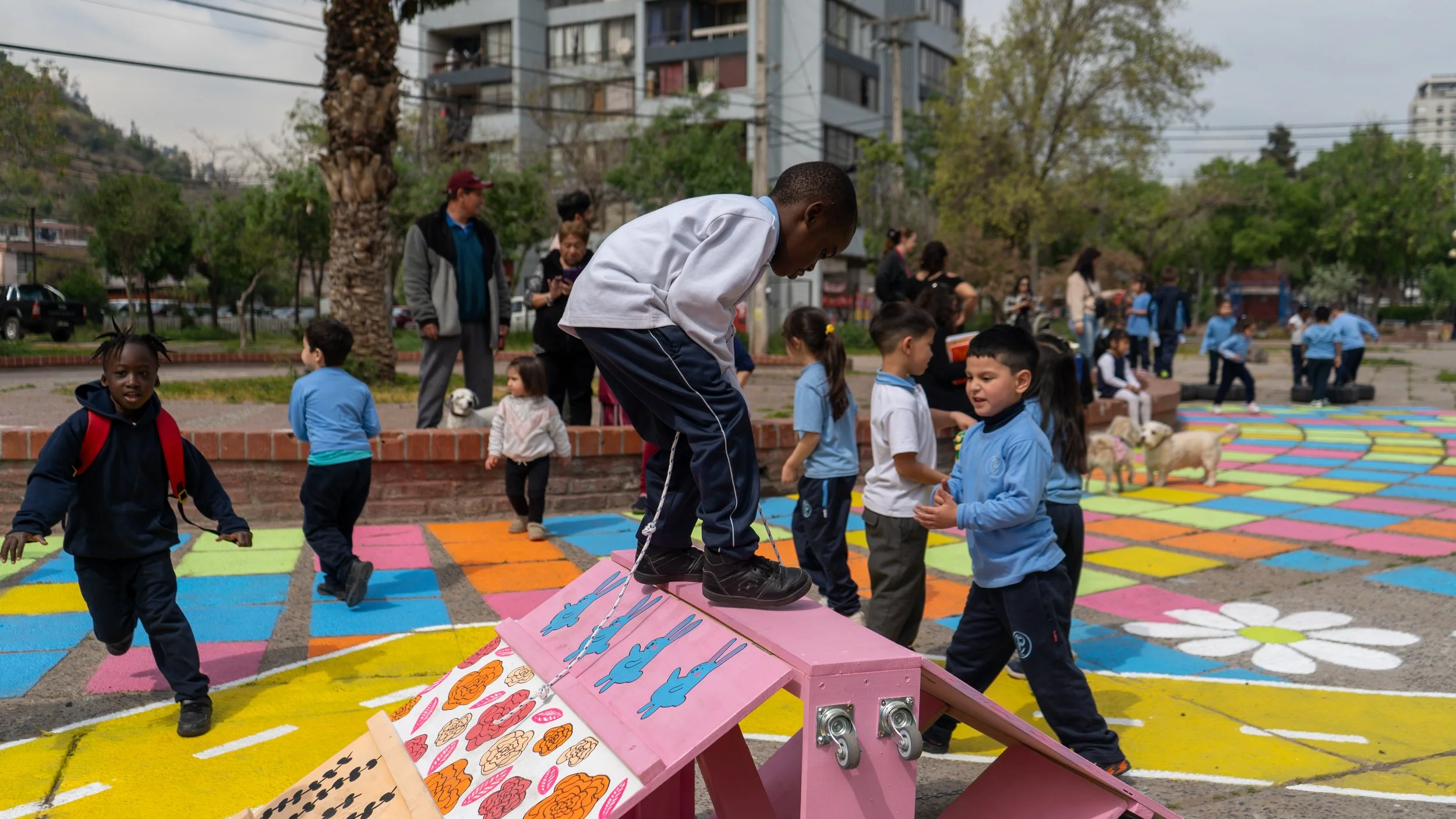
Improve play infrastructure specifically for Kindergarten students, turning "missed opportunities" into active meeting spaces.
Strengthen children’s right to the city and participation, allowing them to decide on the design of their own environment.
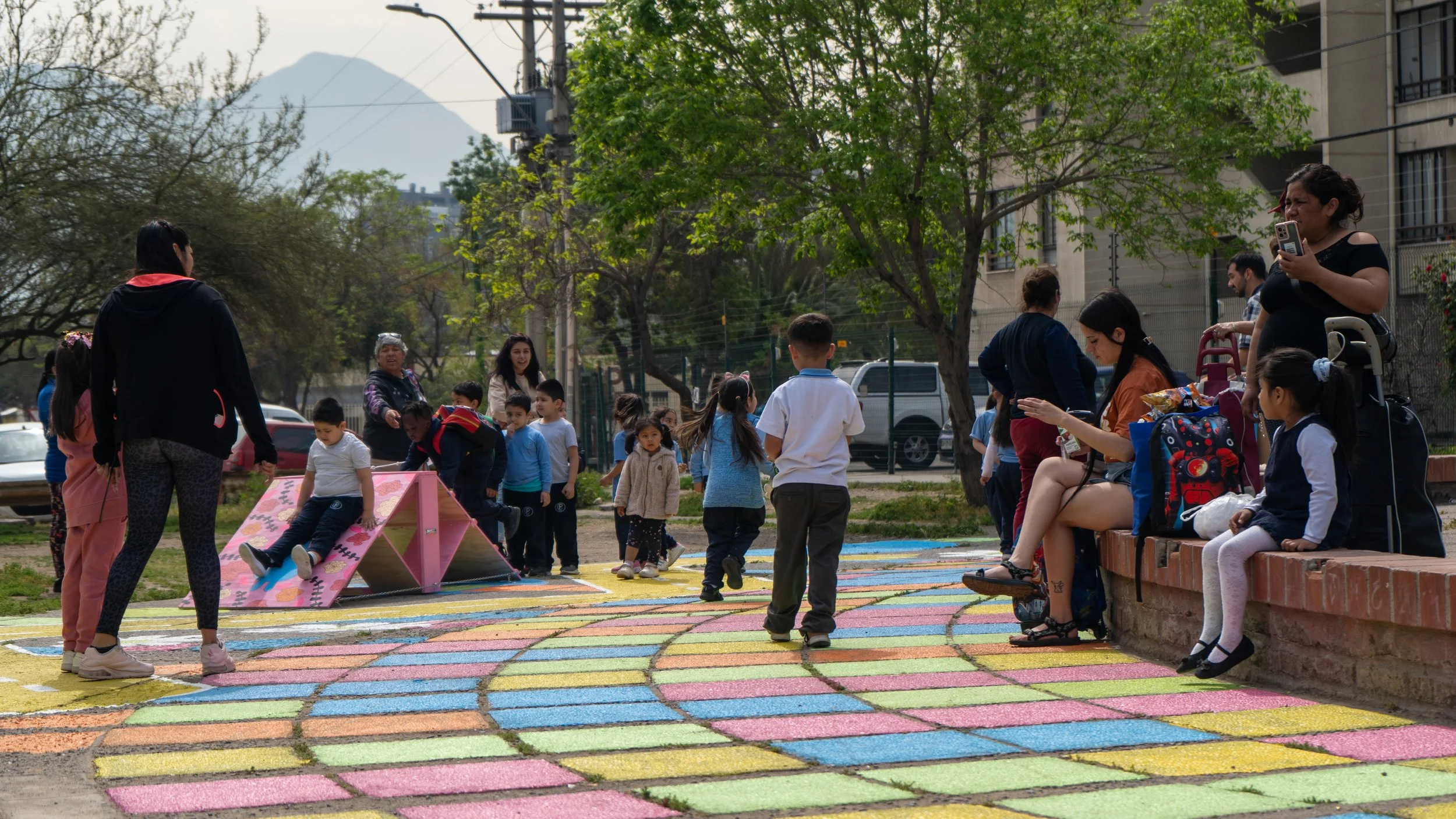
Provide dignified lingering spaces for caregivers during school wait times, fostering community bonds.
Methodology
The project was based on the Proximity of Care Design Guide, developed by ARUP and the Bernard van Leer Foundation, following these steps:
Partnership and Trust Management: Collaborative work with the San Felipe de Neri School to establish shared goals with directors and teachers, who facilitated the link with families.
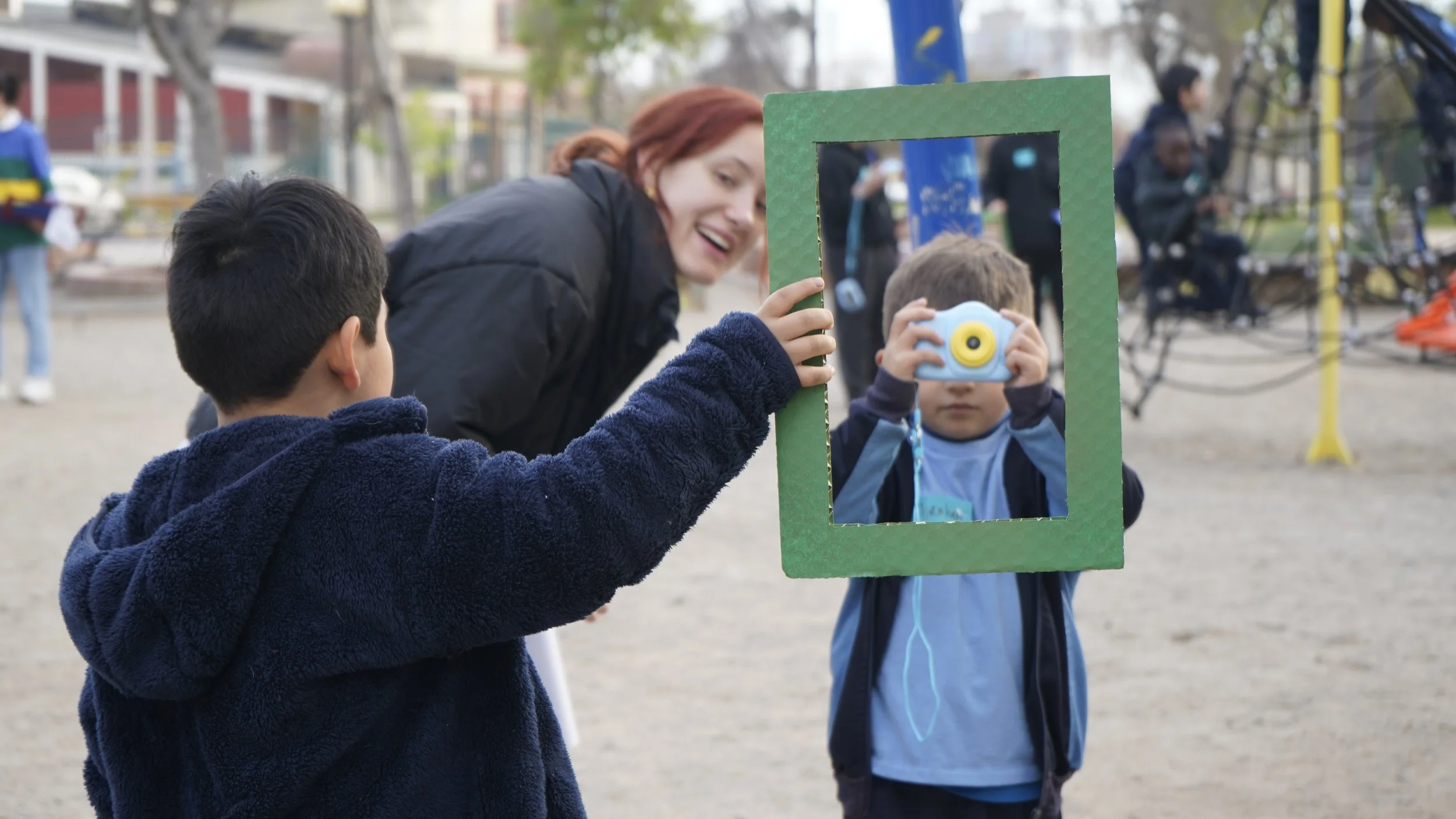
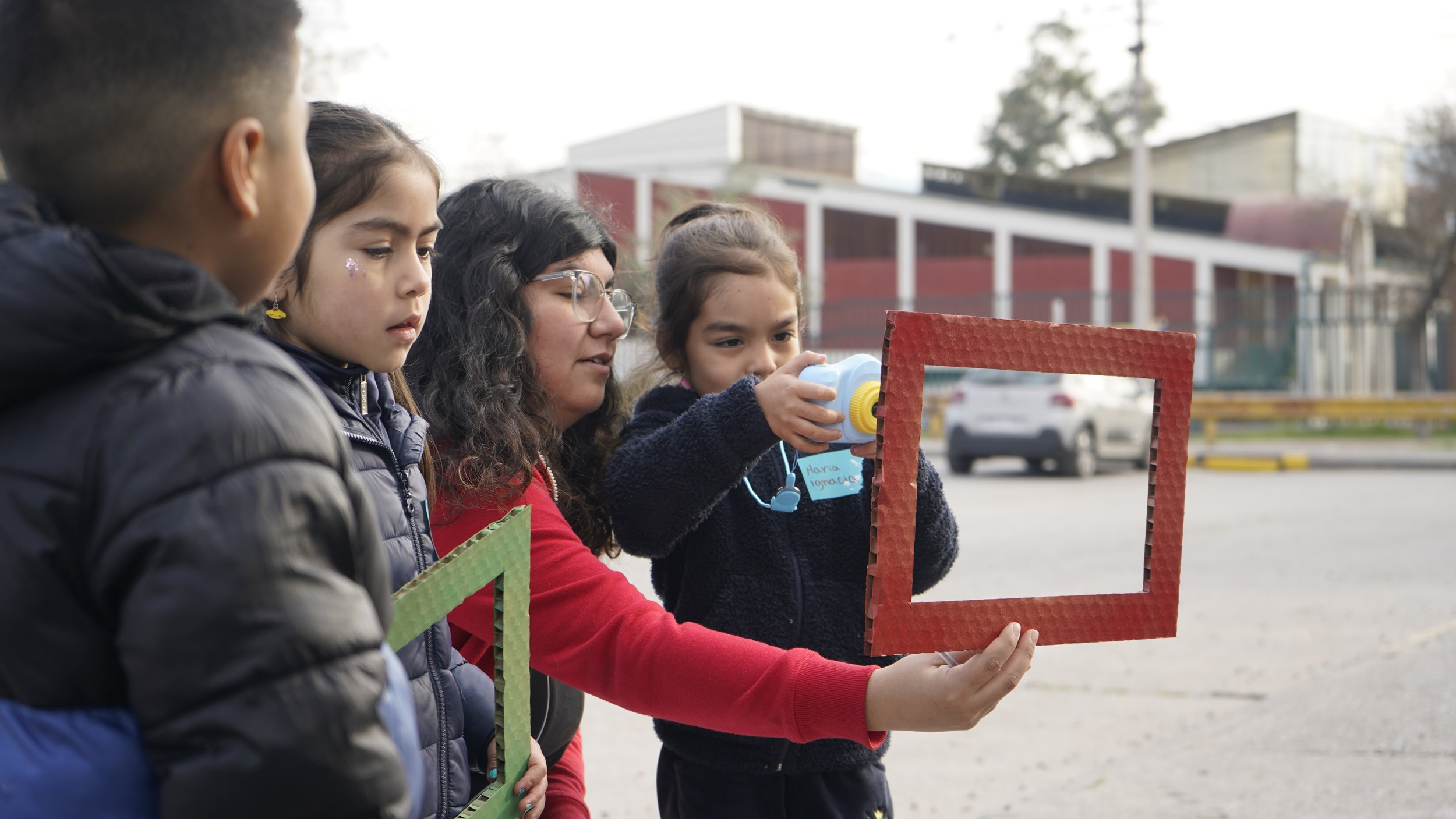
Active Listening and Participation: A co-design process with Kindergarten children to recognize their attachment to the school’s outdoor space and their desires for it.
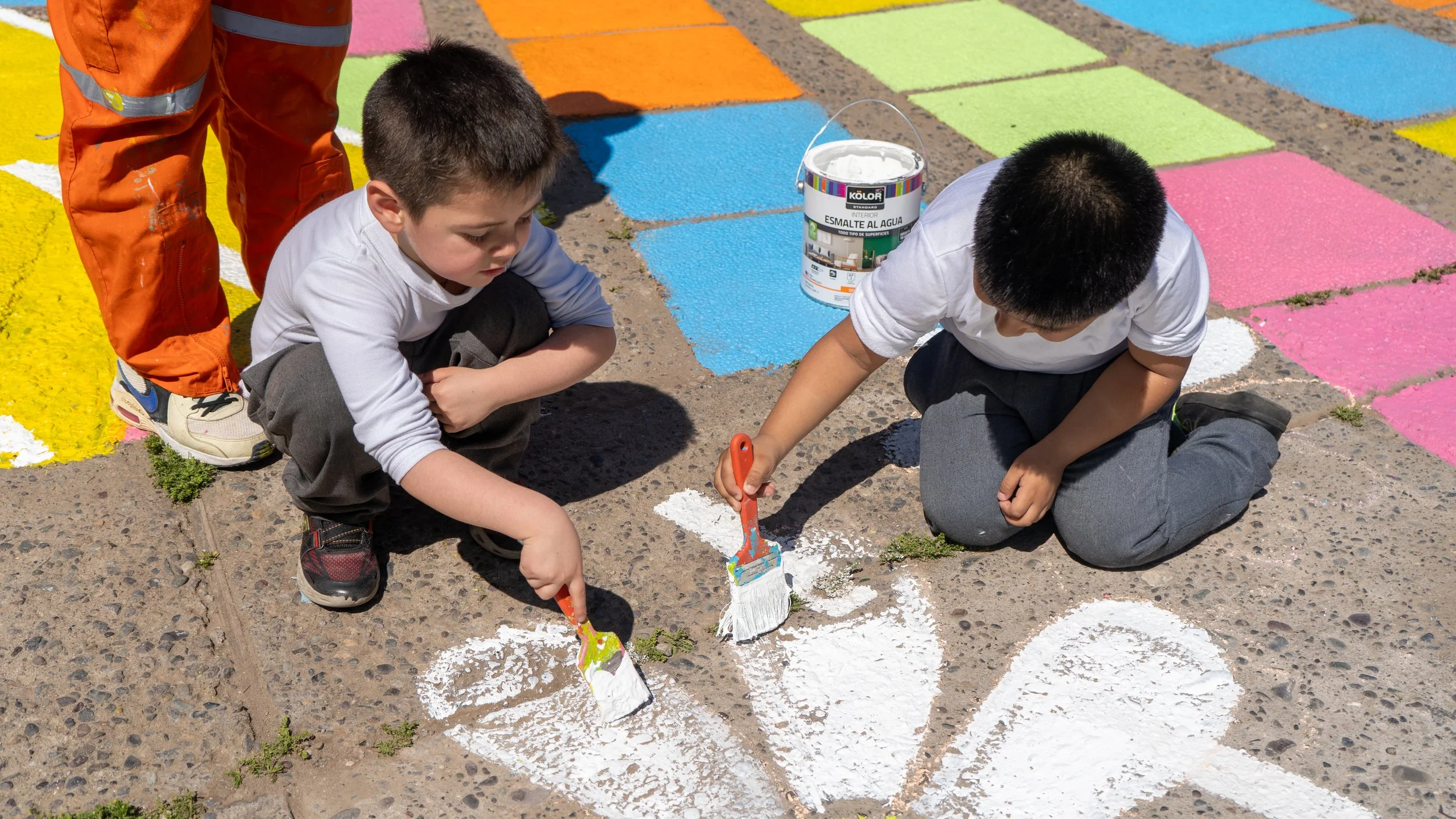
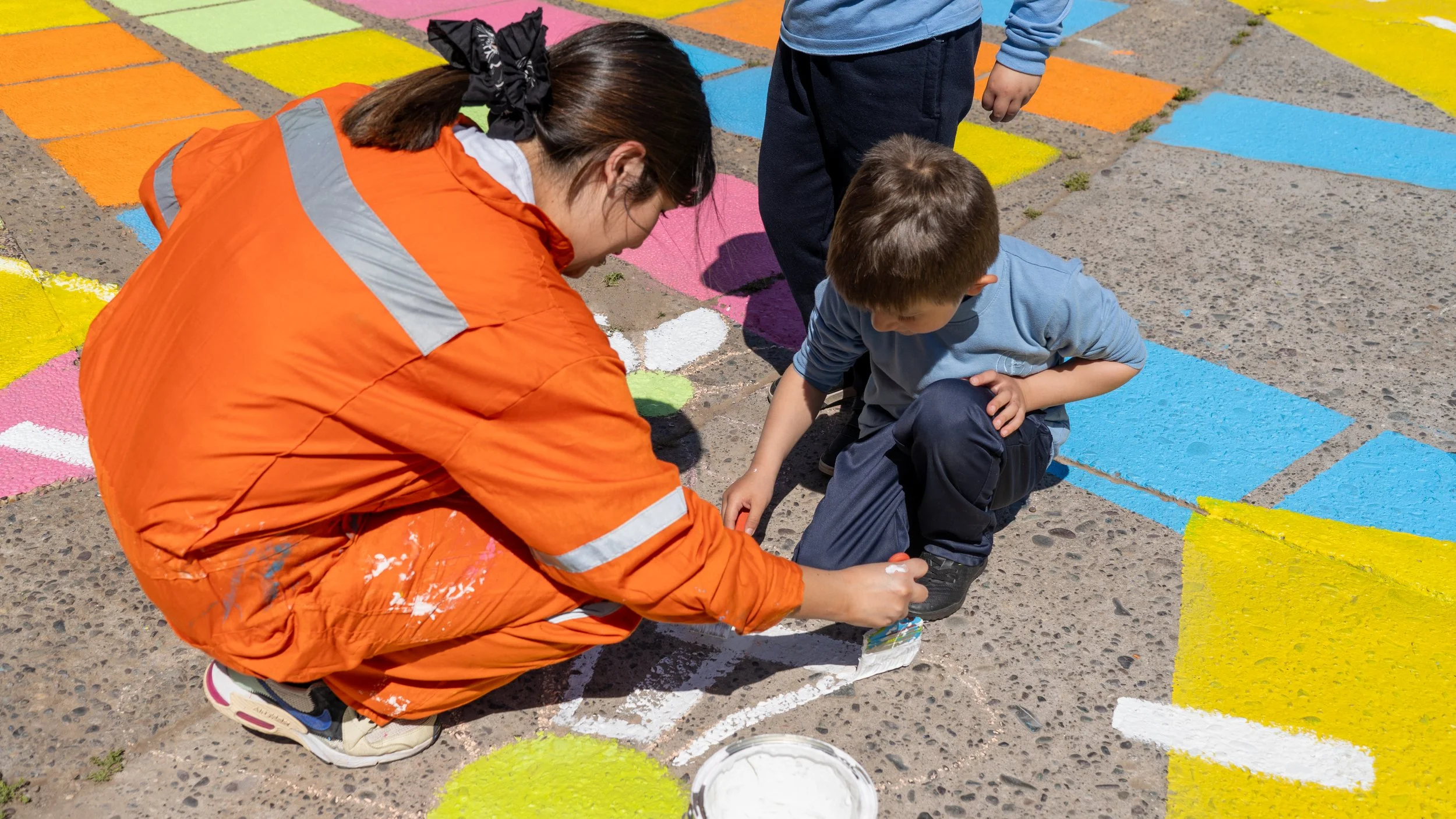
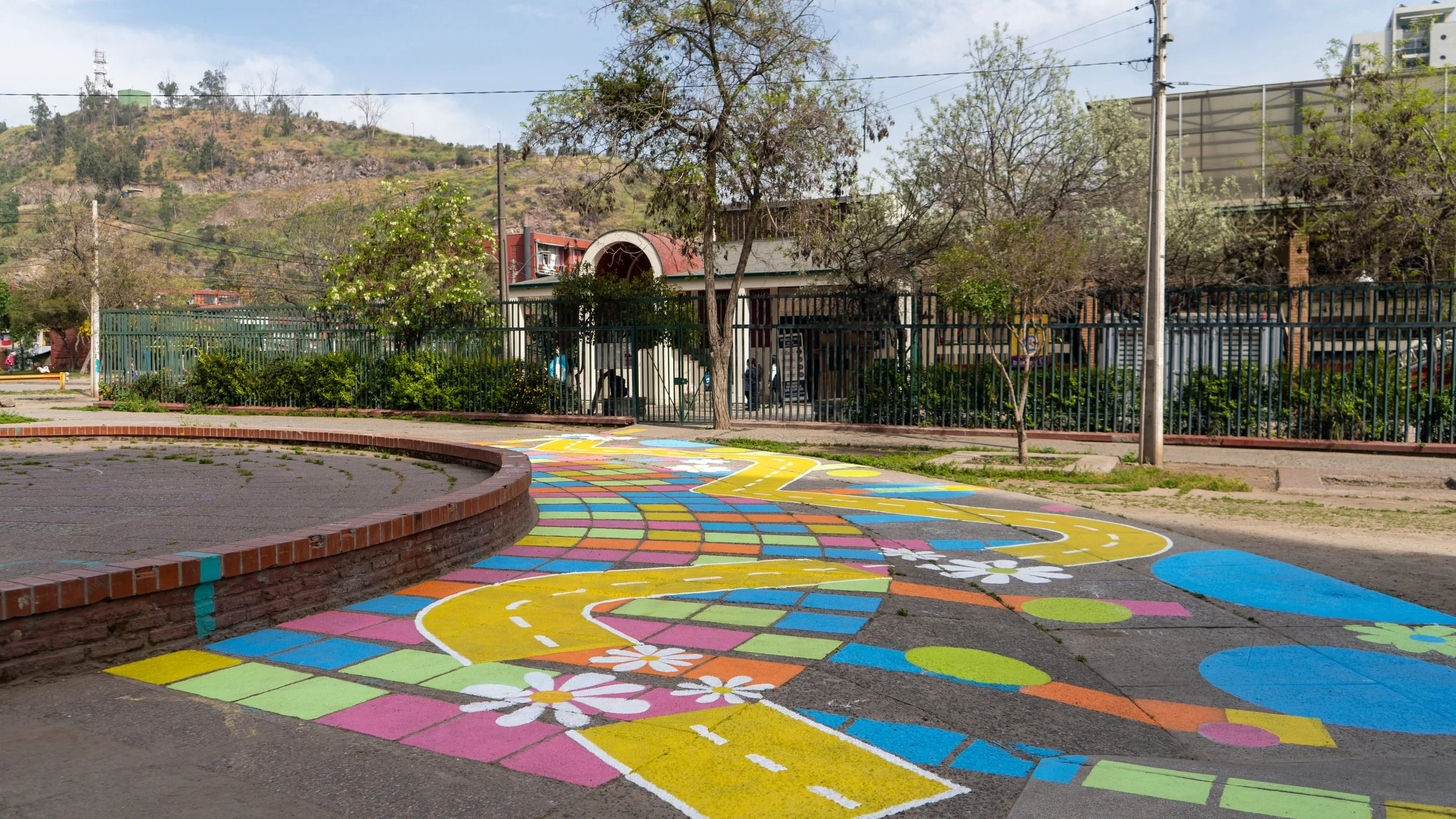
Physical Intervention: Execution of physical changes in the public space adjacent to the school to provide it with identity and playful functionality.
Technical Scaling: Supporting the technical consolidation of previous lessons learned (such as the Valdivia case) for application within the Santiago context.
Clients / Partners
Funding and Conceptual Framework: Bernard van Leer Foundation (Urban95) and ARUP.
Execution: Ciudad Emergente.
Local Partners: Municipality of Recoleta, San Felipe de Neri School, and Mustakis Foundation.
Results & Impact
Local Identity: The waiting area outside the school was given a visual and functional identity, transforming it from a transit point into a place of belonging.
Rights in Action: Effective implementation of children’s right to participate, where decisions made by Kindergarten students directly impacted the final infrastructure.
Care Infrastructure: Substantial improvement in play and waiting conditions, benefiting both the psychomotor development of children and the well-being of caregivers, who now have a designated space to accompany play.
Model Consolidation: The Recoleta pilot served to strengthen the "Care Neighborhoods" project network in Chile, connecting the Santiago experience with regional initiatives.
Conclusions
The Care Neighborhoods project demonstrates that the public space surrounding educational institutions is a critical asset for child development. By applying the Proximity of Care Guide, Ciudad Emergente successfully transformed an underutilized area into a well-being ecosystem. The key to success lay in building trust with the school community, proving that when we design for early childhood, we create a more humane and welcoming city for everyone.