Okuplaza
Urban innovation methodology for the transformation of underutilized spaces.
Place
Multiple countries
Year(s)
2013-2024
Objectives
To reclaim underutilized or residual city locations, transforming them temporarily into vibrant plazas and public spaces.
To test new ways of using public space through short-term experimental strategies.
To collect urban data and evidence (perception and usage indicators) to influence the planning and design of definitive long-term projects.
To trigger citizen participation and community partnership processes in diverse cultural contexts.
Methodology
Okuplaza is an evidence-based planning strategy that uses Tactical Urbanism as its core tool. The process is adapted to each territory based on the following pillars:
Disruptive Activation: Temporary occupation of streets, parking lots, or illegal dumpsites through creative designs (modular structures, recycled furniture).
Collaborative Co-construction: Participatory assembly with volunteers and neighbors, promoting a sense of ownership from day one.
Data Lab: Implementation of qualitative and quantitative instruments during the activation to measure feelings, opinions, and pedestrian flows.
Institutional Scaling: Integration of results into formal planning strategies (Municipalities, Regional Governments, or Planning Offices).
Clients / Partners
International: Washington D.C. Office of Planning, UNAM (Mexico), América Solidaria, Kresge Foundation.
National: CREO Antofagasta, Municipalities (Santiago, Valparaíso, Quilicura), National Council of Culture and the Arts, Prokart (Santiago Marathon).
Results & Impact
The model has proven to be highly flexible, being applied in various scenarios:
-
Ocupación masiva con estructuras modulares de bambú para priorizar al peatón en el evento deportivo más grande de Chile.
Ver más: https://www.flickr.com/photos/156783380@N07/albums/72157703511152535/
-
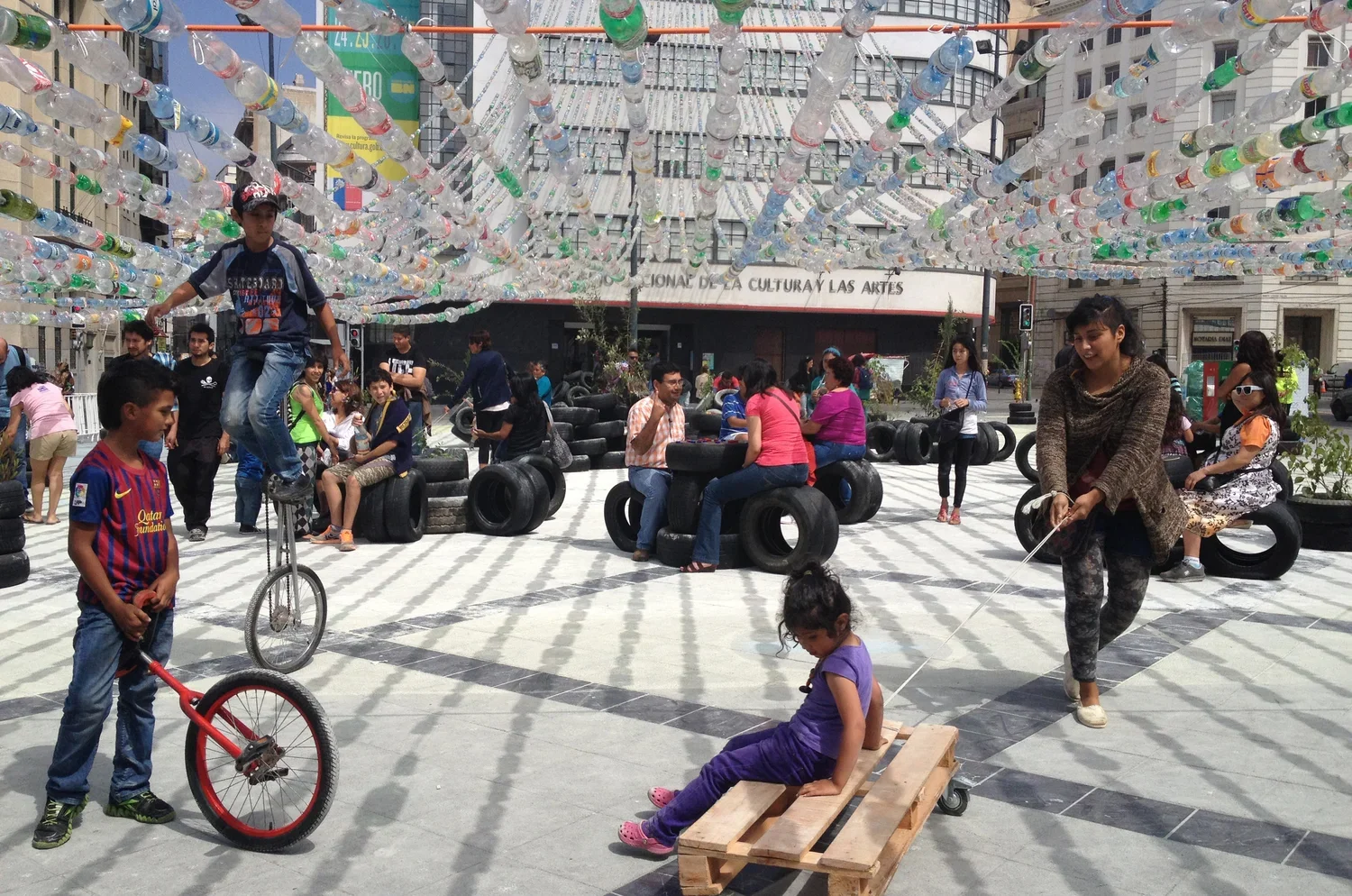
Recolección de 12.000 botellas plásticas en 30 días para co-producir un espacio público hecho de residuos.
Ver más: https://www.flickr.com/photos/ciudademergente/albums/72157637663946374/
-
Uso de hamacas e instrumentos de percepción para debatir sobre la gentrificación en el barrio Adams Morgan.
Ver más: https://www.flickr.com/photos/ciudademergente/albums/72157673982868141/
-
Transformación de un microbasural en un espacio educativo con estructuras de sombra y ferias libres.
Ver más: https://www.flickr.com/photos/ciudademergente/albums/72157637663836583/
-
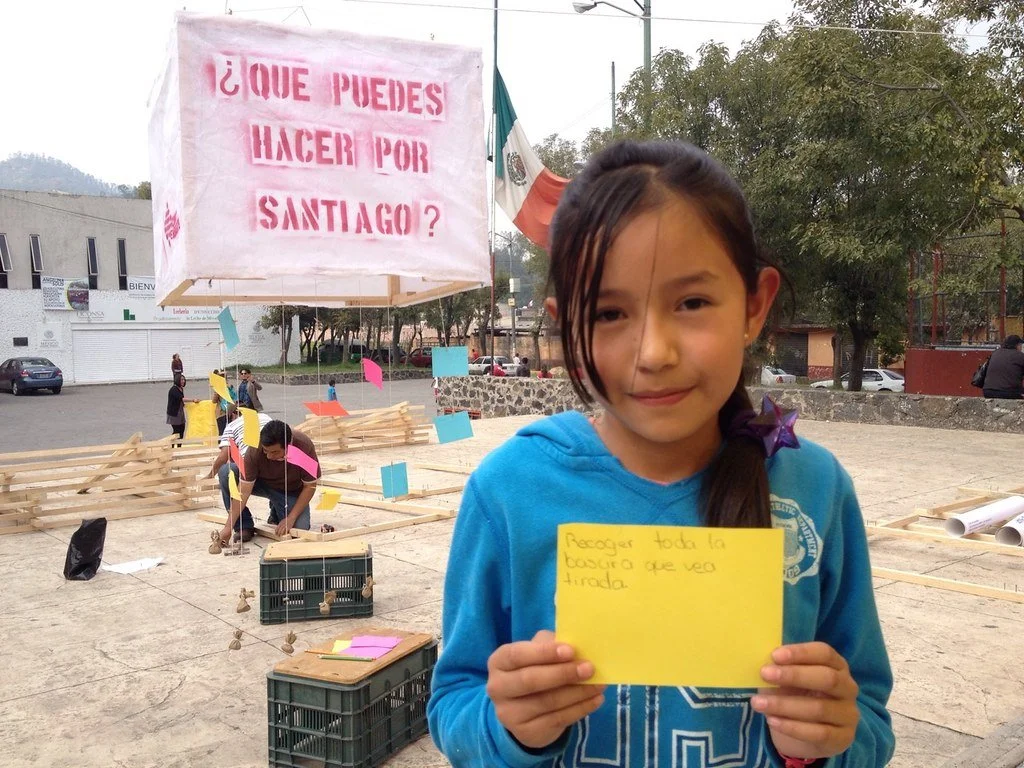
Recuperación de espacios en el pueblo de San Mateo Xalpa para combatir la segregación socio-espacial.
Ver más: https://www.flickr.com/photos/ciudademergente/albums/72157649328901902/
-
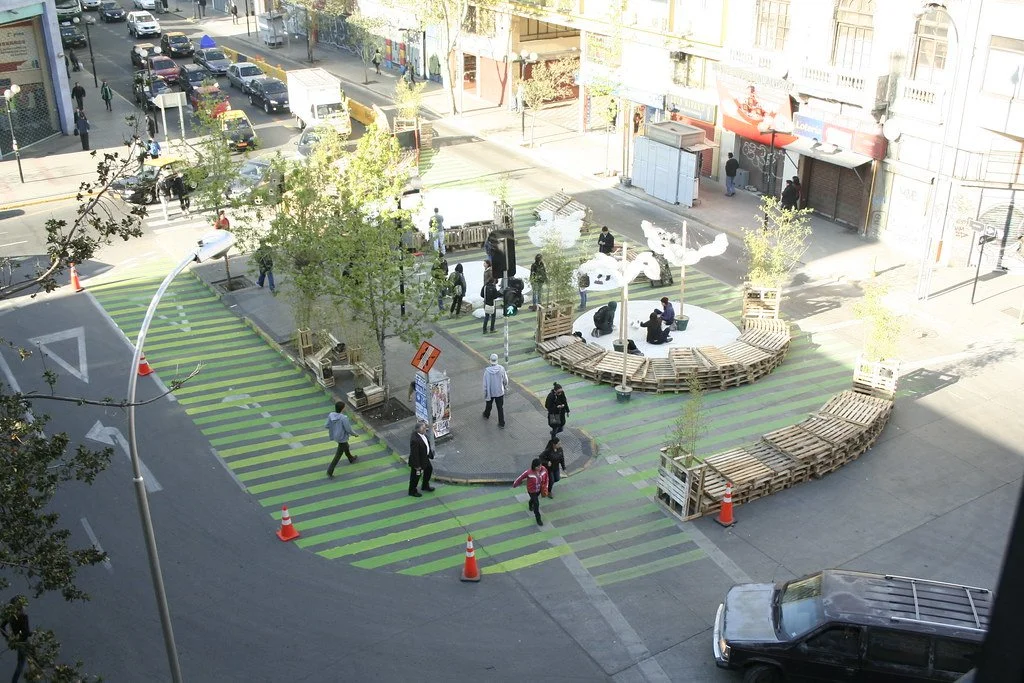
Mitigación del impacto por obras de Metro, activando el eje comercial mediante cierres de calle creativos.
Ver más: https://www.flickr.com/photos/ciudademergente/albums/72157637663836583/
Conclusions
Okuplaza is proof that large budgets or permanent works are not necessary to start changing the city today. Through this model, Ciudad Emergente has succeeded in "igniting" the imagination of communities and decision-makers, demonstrating that a parking lot can be a plaza, that trash can be valuable furniture, and that citizen data is the most important input for sustainable urban design. It is a tactic that has crossed borders, validating that the human desire for gathering and play is universal.
Okuplaza México
Okuplaza San Diego
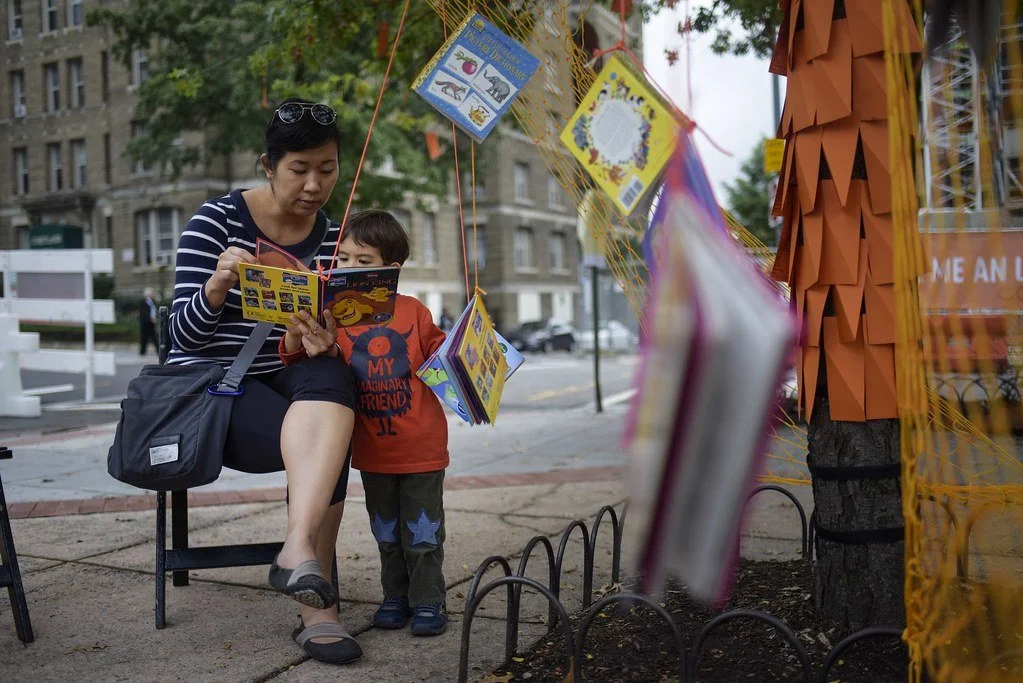
Okuplaza Washington DC
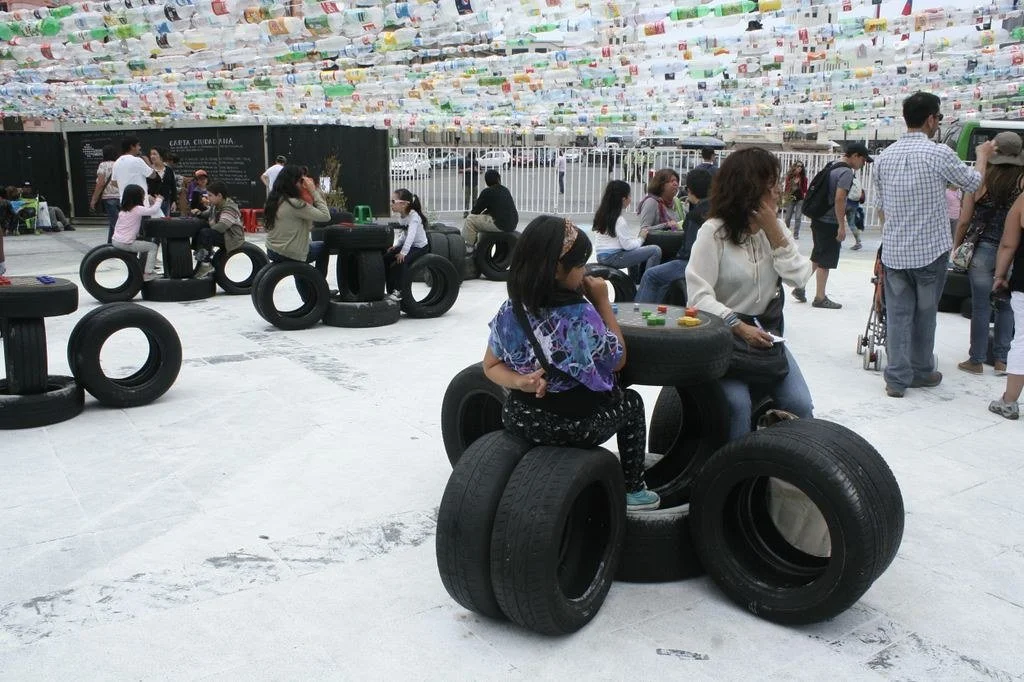
Okuplaza del Reciclaje