Music in the Neighborhood
Open-air concerts to foster citizen participation and local talent.
Place
Antofagasta, Chile
Year
2014
Objectives
To foster citizen gathering in public spaces through high-quality, free-access cultural events.
To highlight and recognize local talent, integrating them into the same platform as artists with national and international careers.
To activate reclaimed public spaces, consolidating their transformation through culture and creativity.
To connect communities with their urban environment, using music as a tool for mediation and social cohesion.
Methodology
Music in the Neighborhood is deployed as a cultural activation tactic that accompanies larger-scale projects:
Inclusive Curation: Programming artists who mix contemporary genres with local traditions (such as the fusion of jazz and marimba in Guatemala).
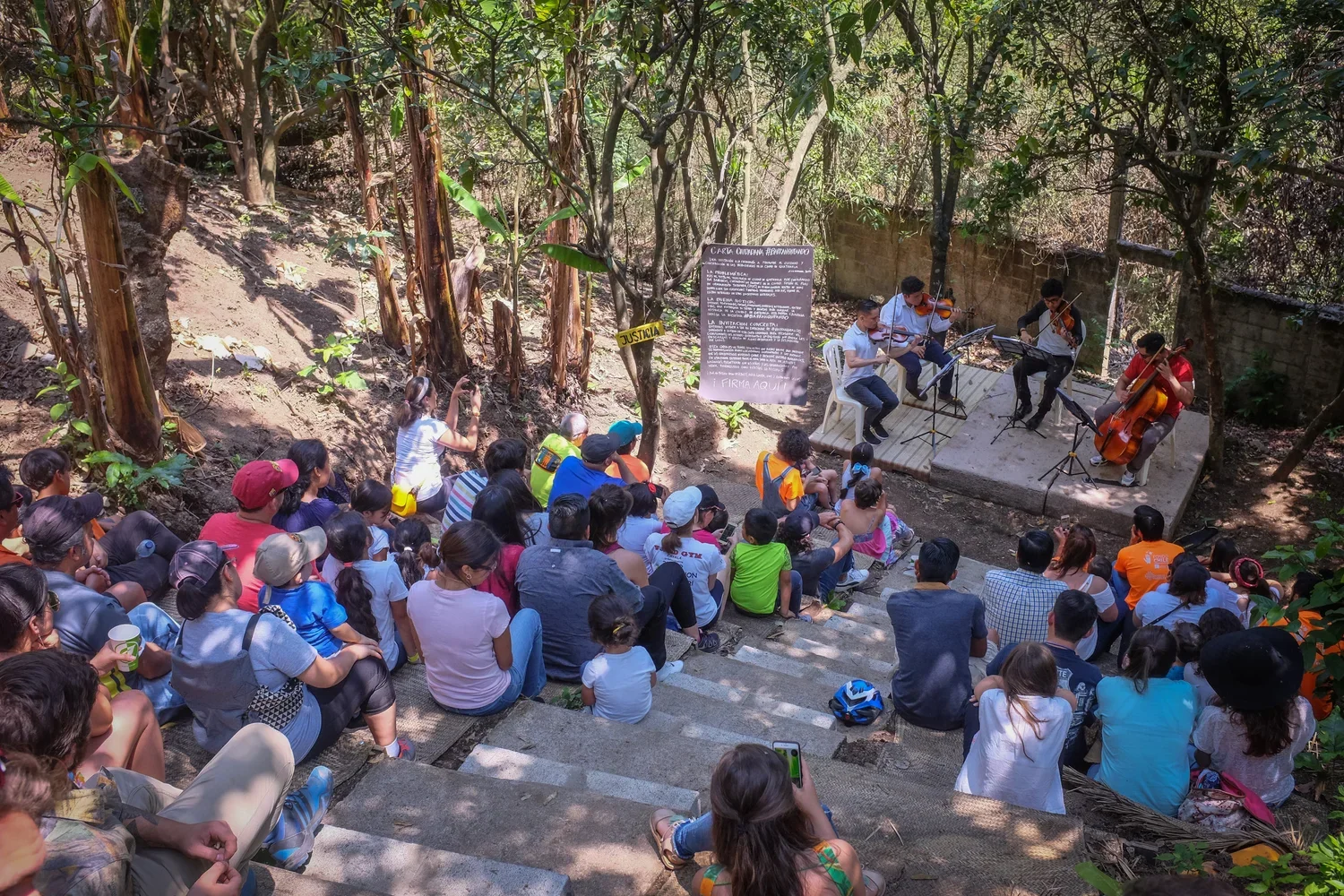
Setting up Temporary Stages: Utilizing amphitheaters or esplanades reclaimed through tactical urbanism to host massive or intimate events.
Closing Milestones and Celebration: Implementing concerts as wrap-up activities for urban transformation processes (such as Eco Carnivals or tactical closures).
Community Management and Self-management: Coordination between public and private institutions and local organizations to ensure the sustainability and safety of the events.
Clients / Partners
National (Chile): CREO Antofagasta, Minera Escondida (Antofagasta Clean and Connected Project).
International (Guatemala): UNDP, Chilean International Cooperation Agency (Shared Cities Project), Friends of the Urban Jungle.
Featured Artists: Gepe, Ases Falsos, Jazzimba, Guatearmónicos Choir.
Results & Impact
Activation of Critical Neighborhoods: Transformation of residual zones (such as urban ravines) into centers of culture and harmonic melodies.
Strengthening Local Identity: Promotion of emerging bands in front of mass audiences, boosting the artistic scene of each territory.
High Citizen Attendance: The Eco Carnivals and concerts have successfully gathered thousands of people, validating the community's desire to inhabit their streets with safety and art.
Social Sustainability: The events have served to "celebrate" the cleanup and connection achievements of the neighborhoods, reinforcing the residents' commitment to caring for the new spaces.
Conclusions
Music in the Neighborhood demonstrates that culture is the most powerful engine for revitalizing public space. Through these encounters, Ciudad Emergente ensures that reclaimed infrastructure takes on a life of its own, transforming concrete into a stage for coexistence. Whether in Antofagasta or Guatemala City, this project confirms that when music plays in the street, fear recedes and the community strengthens, proving that art is a right that must be lived and shared in the city.