Shared Streets
2021 UN-Habitat Scroll of Honour Award: A paradigm shift for low-carbon districts.
Place
Multiple countries
Year(s)
2016-2022
Objectives
To redefine street use, moving from car-centered infrastructure to a democratic space shared by all modes of transport.
To reduce CO2 emissions by fostering sustainable mobility habits (walking, cycling, and public transport).
To encourage social cohesion and well-being, promoting behaviors of empathy, respect, and mutual care among road users.
To democratize public space, eliminating physical segregation to allow for a personal and human negotiation of the common space.
Methodology
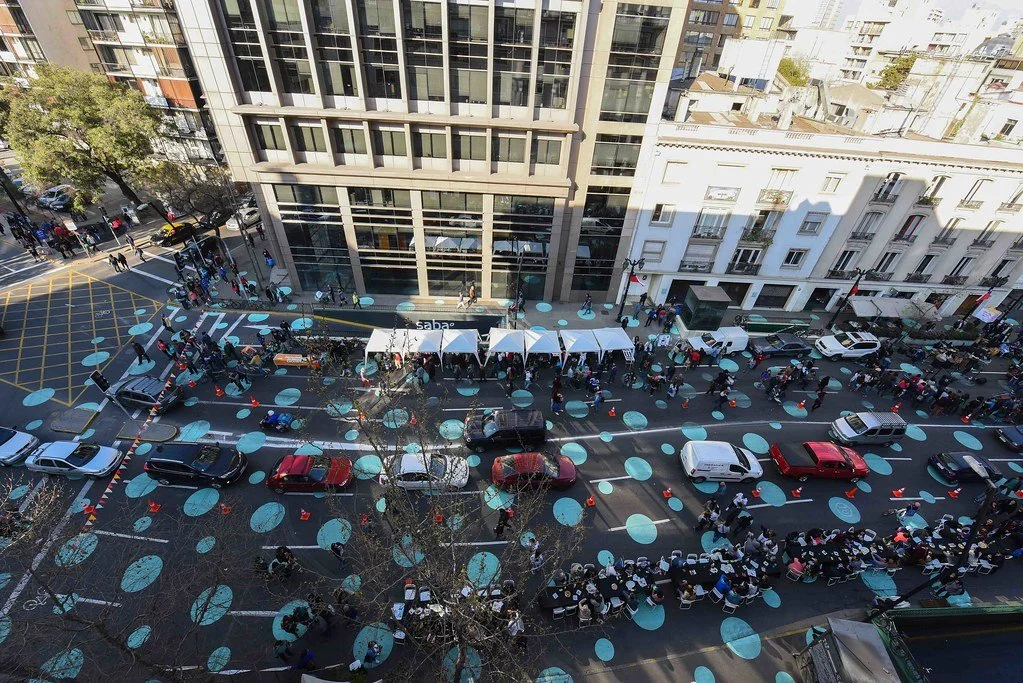
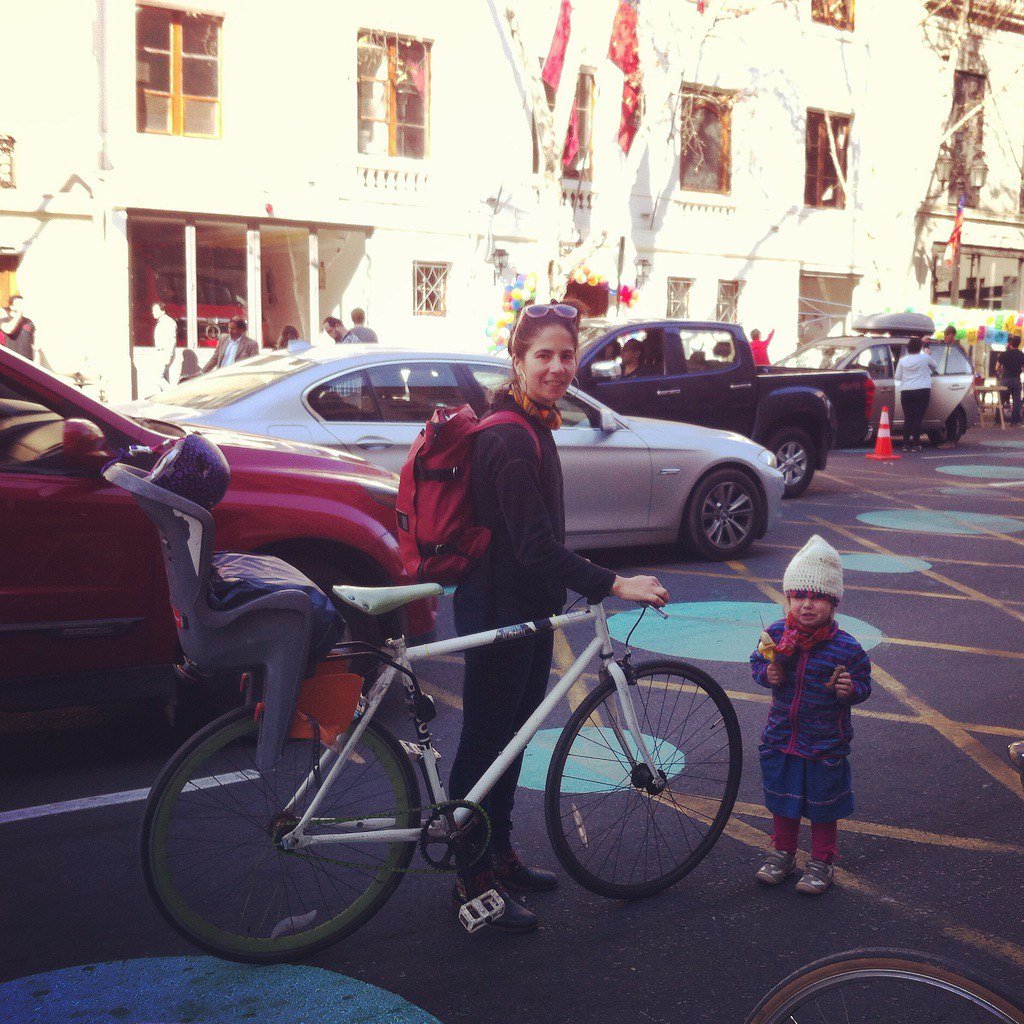
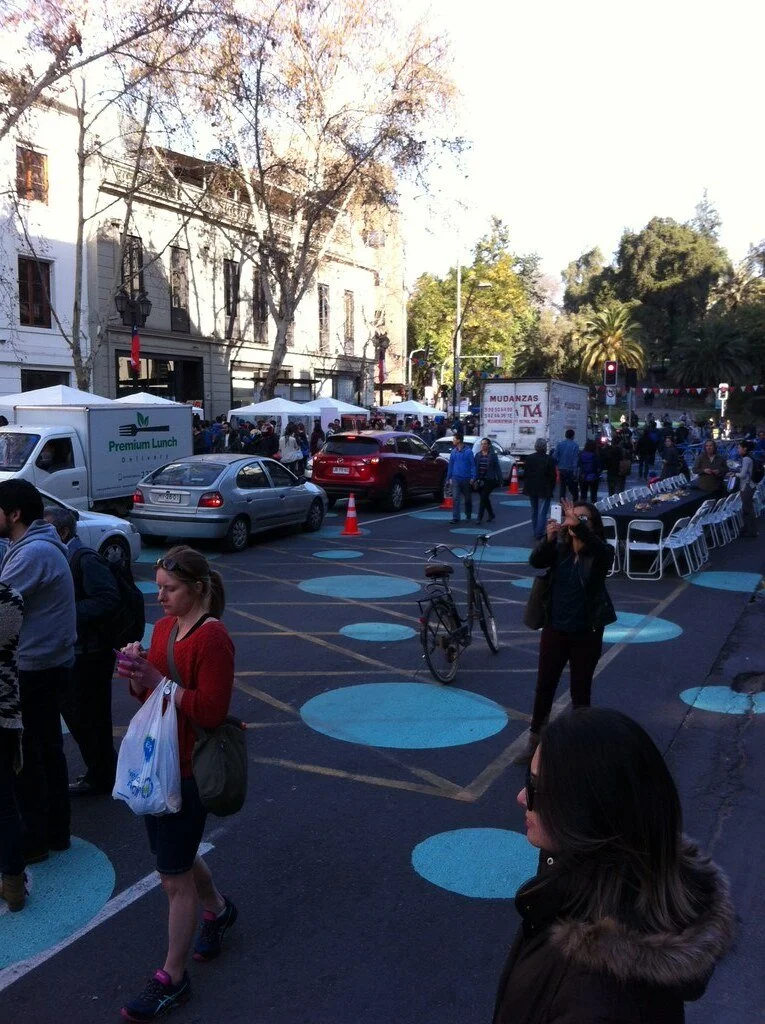
The "Shared Streets" concept is based on omitting traditional segregation (curbs and restrictive signage) to level the street into a single platform. The process implemented by Ciudad Emergente includes:
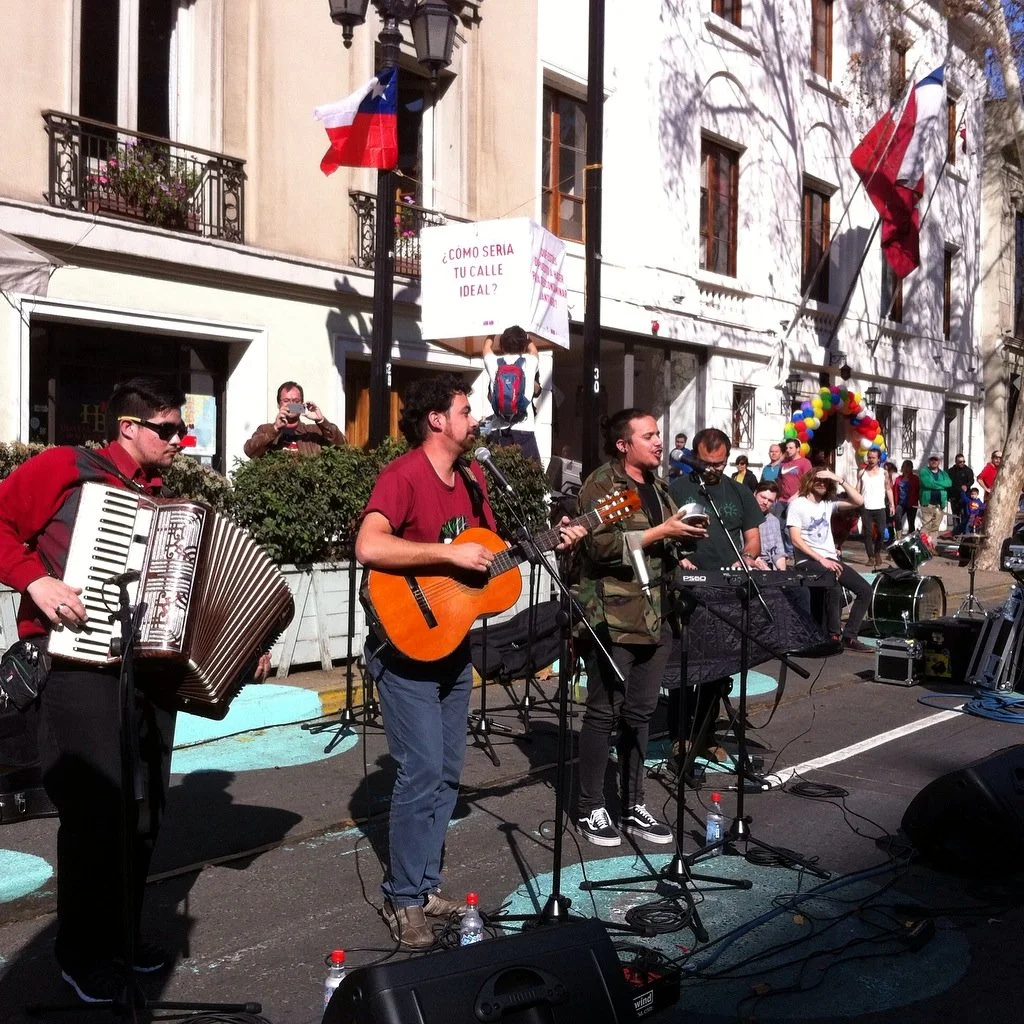
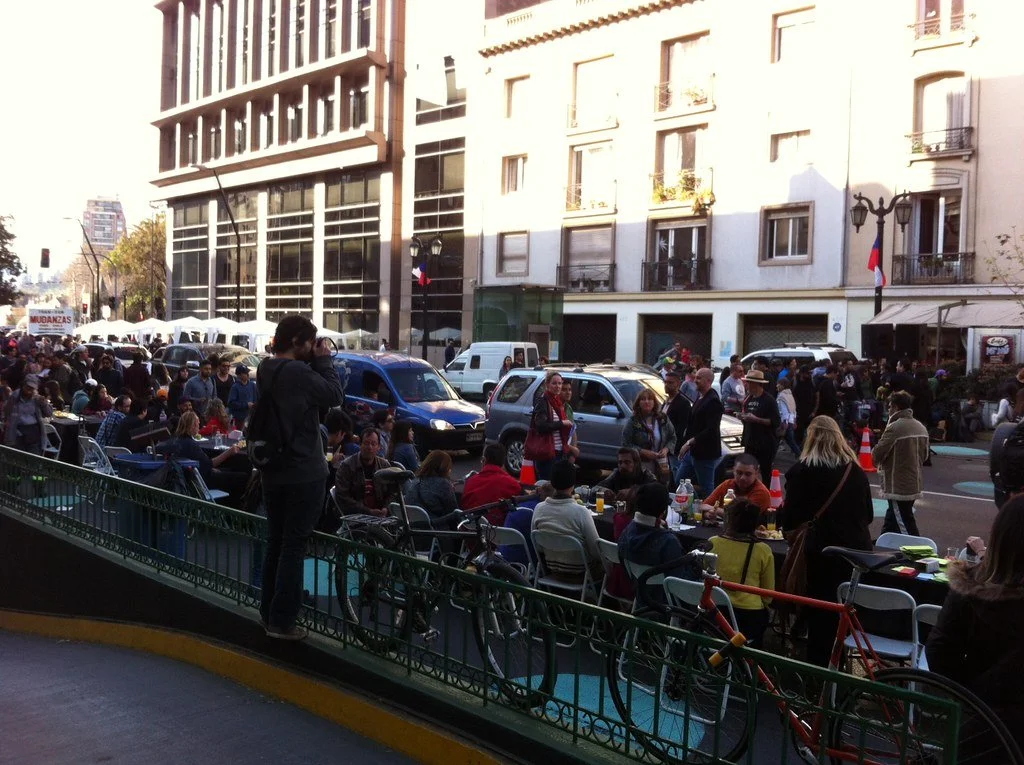
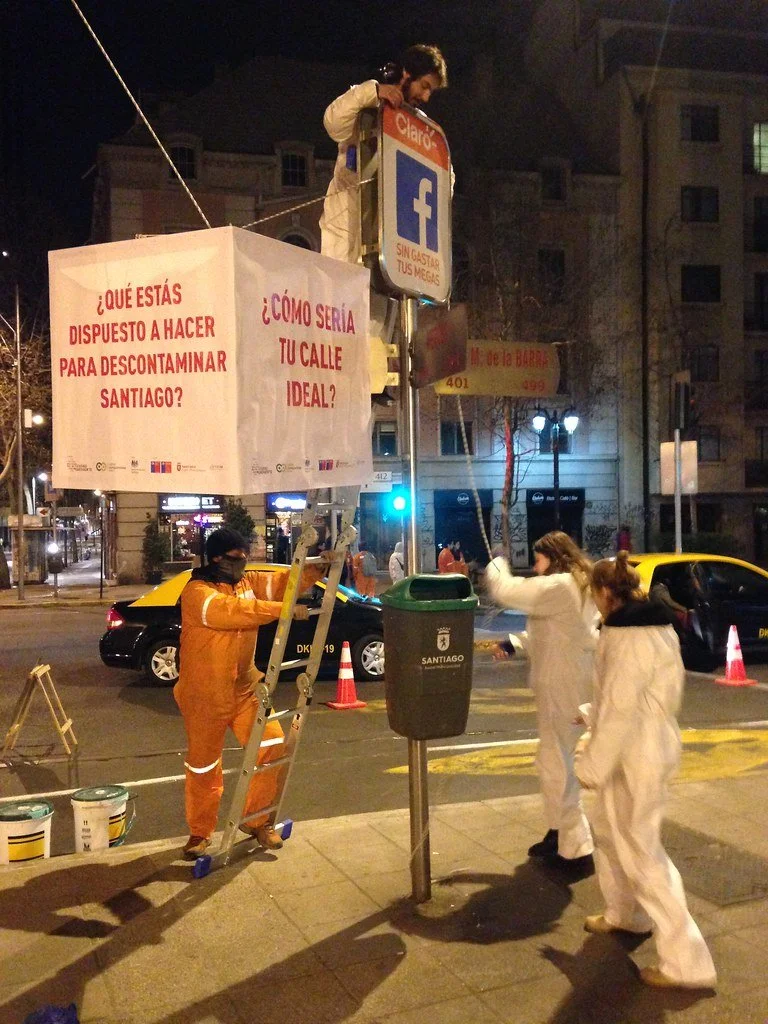
Experimental Tactical Urbanism: Implementation of short-term pilots to test social behavior without traffic signs, forcing drivers to negotiate the space with pedestrians and cyclists.
Environmental Impact Measurement: Evaluation of the reduction in pollutants and particulate matter associated with changes in mobility habits.
Socially Centered Design: Urban design proposal that levels the street grade to a single surface, facilitating universal accessibility and human interaction.
International Transfer: Application of the tactic in diverse contexts (Panama, Honduras, Chile) to validate its cultural and political adaptability.
Clients / Partners
Strategic Allies: Foreign & Commonwealth Office (United Kingdom), UN-Habitat, Ministries of Transport and Environment (Chile).
Technical Collaborators: ARUP Consultancy, The Big Lunch Project (England), and FabLab Santiago.
Local Governments: Municipality of Santiago (Chile), City Hall of Danlí (Honduras), and Panama City.
Results & Impact
Global Recognition: Ciudad Emergente was selected from among more than 80 organizations worldwide for the excellence of this project in urban sustainability.
Permanence in Danlí, Honduras: Due to the pilot's success, the Municipal Council decreed the intervention's permanence, turning a temporary tactic into a definitive public policy.
Transformation in Panama City: Under the name "Panamá Camina," one of the city's most congested avenues was intervened, prioritizing art, culture, and active mobility.
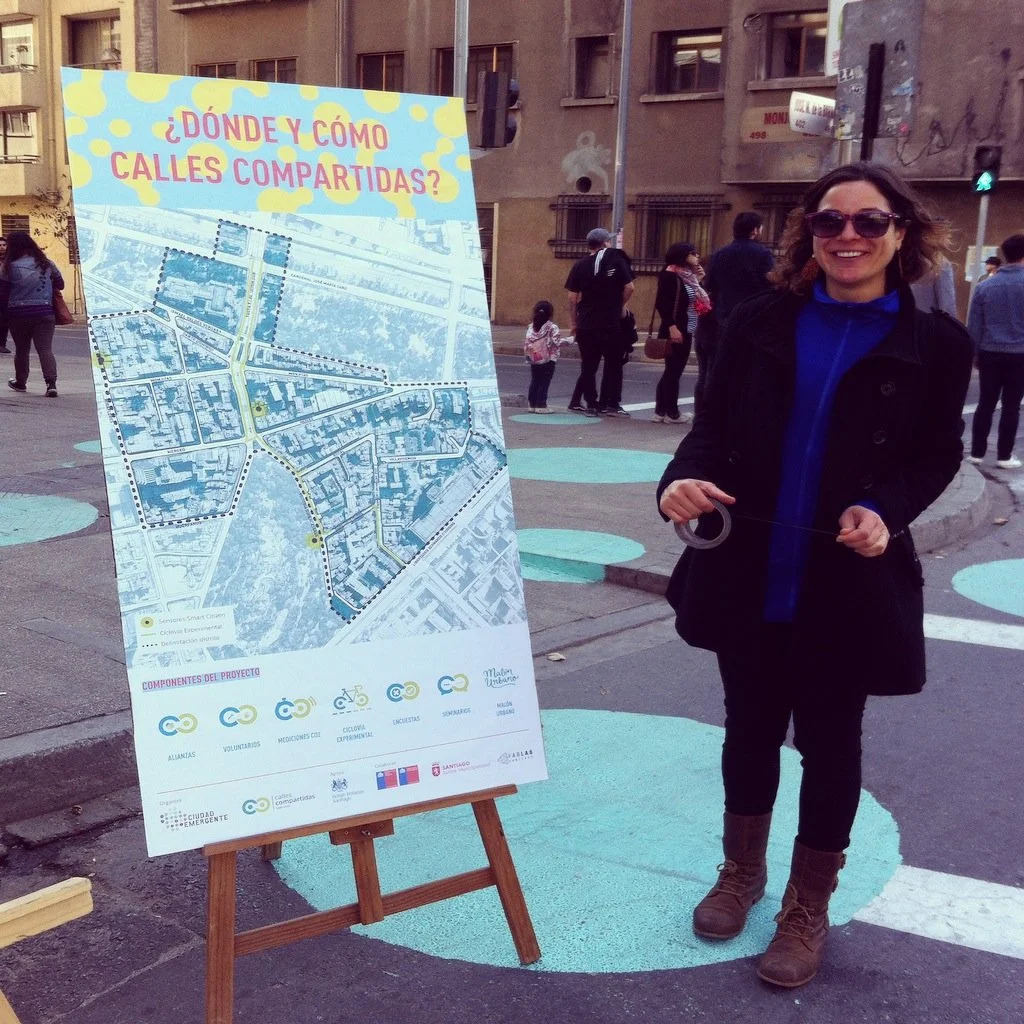
Low-Carbon Districts: In Santiago (Lastarria and Bellas Artes neighborhoods), the project laid the groundwork for the design of resilient and less polluted neighborhoods.
Conclusions
Shared Streets is more than a transport project; it is an exercise in urban democracy. By placing vehicles at the same surface level as pedestrians, their power is minimized, and the need for human negotiation arises. The award granted by the United Nations validates our vision: that the cities of the future do not need more signs, but rather more spaces that foster solidarity and respect. This project demonstrates that a change in habits is possible when urban design invites sharing instead of segregating.